Sunday, August 19, 2012

Poetry Monday: Does Poetry Need to Mean Something?


Last night while playing Boggle, I opened, as I often do, the book I was leaning on.  It was a book of poetry, sent to me for review from a well respected publisher. I won't name it as I have loved much of what this publisher has put out and have no desire to start a poetry war (and after all, Poetry Monday is about supporting poetry), but the first poem I came across was a seeming bunch of gobblydegook - random key-swipes on the laptop coupled with the odd ad phrase such as "soap on a rope".  Very little in this book made any sense to me at all.  Just to take another example, there was a concrete poem (couldn't tell what the picture was) consisting entirely of the letter a.

I don't want to go too far here in my criticisms. As a Joycean whose focus has been on the early 20th century modernists, I'm hardly against literary experimentation. However, the end point has got to be meaning. Even if that meaning is hard to come by and opens new areas of perception. Even if the meaning comes out of the kind of excessively simplified populist performance that (sometimes) makes up the slam. When you just throw words, and letters about in random patterns and syntax with no organisational principles - at least none that are comprehensible to the reader - you degrade, rather than explore and expand language.

Yes, I know there's a literary form called "Asemic Writing". This is writing that is specifically and openly devoid of semantical content. The basic tenet is that it leaves the way open for the reader to provide his or her own interpretation. Surely providing semantical content is the writer's job. Good poetry always allows room for interpretation and reader collaboration. Without any strong referent though, there's little to start the conversation. 

Maybe the problem is with me. I'm quite willing to accept that. This book has won big awards. The poet, even more. Maybe my sense of humour is faulty. I do get that there's a kind of joke here, but I read it as a joke on poetry itself - a single trick that wears thin after the first time. Call me old-fashioned, but I want signifiers when I read. They can be subtle. They can take effort. They can be shocking and intense. But they have to add up to something for me as a reader. In the space between extreme estotericism and trite populism, there has to be a place where something meaningful happens with language - a place of connection between the writer and reader. This is poetry's great focus; its great gift.  Otherwise it's just cacophany and emptiness.  And there's already plenty of that.

What do you think? Is meaning making an important part of poetry or am I missing the point of asemic writing? Tell me what you think - and please don't feel you need to agree with me - I'd like to hear a justification of this kind of art.

Thursday, August 16, 2012

Black Cow Greeting Card!

I was overwhelmed when the wonderful Sarhn McArthur sent me a beautiful, customised card. It made me laugh and touched me deeply that she took the time to do this. The card was very clever too, glossy and professional, but with note inside that appeared to be handwritten.  Sarhn's own photography is amazing and well worth a look, as is the greeting card site that she made this card with.  If you're looking for promotional cards or just want to send out posted (real mail), very personal cards for special occasions, this is a great way to do it. Sarhn also runs the blog Greener Me, which is how I found her in the first place while I was researching Black Cow - the blog is full of inspirational ideas on how to live a greener life, with a definite Sydney feel and lots of Sarhn's great photos.  Thank you Sarhn, for the support and inspiration!


Monday, August 13, 2012

Poetry Monday: William Carlos Williams' Asphodel, That Greeny Flower

Inspired by the wonderful work of Ellen Mandel in reminding me of some of the giants of poetry that have coloured my perspective, I thought that today I'd feature a poem that I cite often, and that, because it is long and complex is often left out of anthologies and readings.  William Carlos Williams' work is sometimes deceptively simple, but not "Asphodel, That Greeny Flower", which is simultaneously a love poem, an extended apology, a botanical exporation, a rumination the meaning of life, and perhaps most powerfully of all, a meditation on the meaning of art--poetry in particular.  I can't produce it all here - there are copyright restrictions for one thing and it's quite lengthy for another, but I urge you to read the whole of it, maybe several times.  Here are a few excerpts (my favourite bits) to whet your appetite:

Of asphodel, that greeny flower,
  like a buttercup
    upon its branching stem-
save that it's green and wooden-
  I come, my sweet,
    to sing to you.
We lived long together
  a life filled,
    if you will,
with flowers.  So that 
  I was cheered
    when I came first to know
that there were flowers also
  in hell.
 
*************


My heart rouses
  thinking to bring you news
    of something
that concerns you
  and concerns many men.  Look at
    what passes for the new.
You will not find it there but in
  despised poems.
    It is difficult
to get the news from poems
  yet men die miserably every day
    for lack
of what is found there. 
 
For more, you can visit read the entire text at PoemHunter.  You can also read some analyses at the 
University of Illinois' Modern Poetry site.

Thursday, August 9, 2012

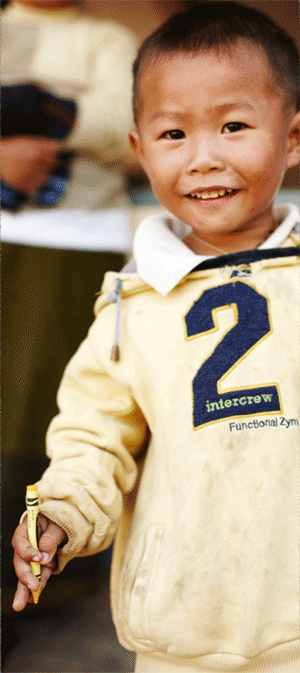
The new Pencils of Promise campaign page is up and running! Literacy has always been the backbone of my life, and the lives of my children. Helping others achieve literacy (and therefore opening the door for choice, for a broader, more expansive future) through the proceeds from my writing -- an outcome of that literacy, which was provided to me, freely and abundantly -- makes perfect sense. Won't you join me?  If you don't already have a copy of Black Cow, you can grab one for less than $6 - an easy way to contribute (and a good read too by many accounts!). If you've already got a copy then you've already helped as I'm contributing 50% of all my sales including those past and hand sales at events (once coming up very soon - more on that in the near future). If you want do more, or join the campaign, then click here.

Let's create a ripple effect!


Change a life: doing something impossible for literacy

Those of you who follow my blog will know that I've been inspired by my mate Joel Runyon's Impossible HQ to try and ramp things up a little and get involved in a little philanthropy. Why? It's not like I'm one of those wealthy ladies who lunch. I've got a busy life, work hard, and have plenty of home grown mouths to feed, but I've long felt like I need to incorporate some charity based work into what I do - to formally set out to change a few people's lives for the better.  One of the many reasons for wanting to do this is because I want to live in the kind of world where helping others and charitable giving is on the agenda for everyone, and because I know how powerful the ripple effect is for giving.

One of the top items on my Impossible List is "get involved on an ongoing basis at a high level with a literacy related charity".  Literacy/education is an area that is of utmost importance to me and I've long thought that this was the type of charity that I'd get involved in.  Once again, Joel has come to the rescue by putting out the call for his "Impossible League community" to raise $25,000 dollars to build a school in Guatemala in conjunction with Pencils of Promise.  PoP has built 50 schools over the past few years and over the next few months, they want to build 50 more. In their own words: "education is a living, breathing entity that with the right nurturing, evolves into something spectacular. We’ve learned that every piece of its growth is a challenge and that each pencil, each dollar, each volunteer is essential." Sounds like a worthy cause for me to begin my own philanthropic journey with. So here's the deal.

I've yet to be paid royalties on my latest novel Black Cow.  My publisher has promised payment to all authors in August (hey, it's August now!).  Since the opportunity has arisen, I'm going to publically pledge 50% of all the sales that I've made so far and am yet to make on sales of Black Cow to the PoP cause (a cause well aligned with the theme of the book).  I don't know how much that will amount to at this stage, but whatever it is - a lot or a little, PoP have got 50% of it.  If you'd like to support this great cause and help provide a school for these gorgeous young kids who want only to learn (and get a great read in too that some reviewers have called "life changing", go pick up a copy of BC now - maybe for a friend if you've already got it and join me.  Or you can go directly to PoP and contribute to our project here:  http://www.pencilsofpromise.org/fundraise/fundraiser?f=a0GU00000050QBQMA2&r=1
or you can help spread the word on your social networks by clicking on one of the little share buttons below.

Thanks for being part of something exciting! I'll update the figure here as soon as I know what it is.

Monday, August 6, 2012

Poetry Monday: Poetry Super Highway


Fifteen years ago, California poet Rick Lupert decided to create his own information superhighway (that is, a route for the high-speed transfer of information) centred around the sharing and proliferation of poetry. The site has since grown to almost epic proportions which is a testament to the number of people reading and writing poetry around the world. Poetry Super Highway, which is very much a global endeavour, has all sorts of fun stuff going on, including lots of poetry links, a newsletter, open readings, poets of the week and so on, but what keeps bringing me back is their great annual contest.  I've been a sponsor for quite a few years and am back this year for another round of fun. Entry fee is a modest buck, and believe it or not, every entrant gets a prize.  The top 3 scoring poets all win cash. Such a deal. You can enter here: http://poetrysuperhighway.com/pshco.html

Saturday, August 4, 2012

Ebook uptake - an author's personal perspective

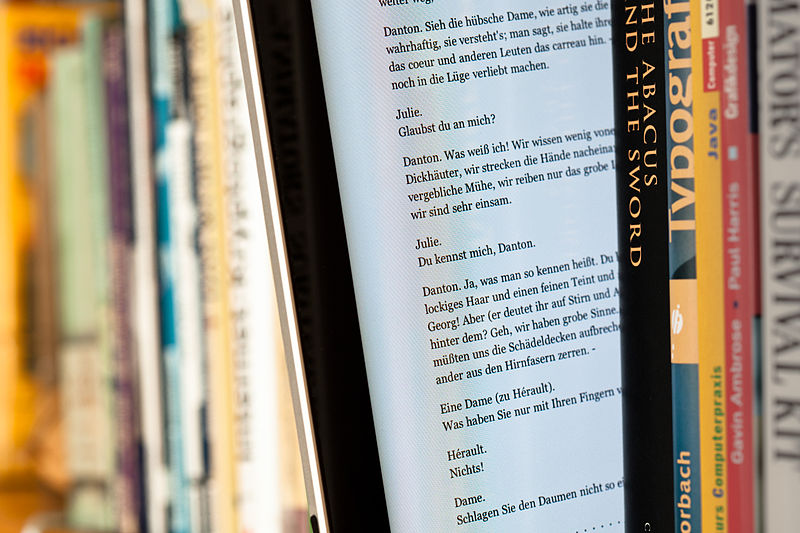
In 2010, my first novel Sleep Before Evening was published. At the time, I sold only a small number of ebooks and most of the relatively limited action took place around print copies. What a difference two years has made. According to ZNet,  in June 2012, adult ebook sales overtook adult hardcopy books. According to a study by Pew Research,the average reader of eBooks has read 24 books in the past 12 months, compared with an average of 15 books by a non-eBook consumer. There's now even a NYT ebook bestseller list. Those are, of course, just statistics, and we all know how suss stats are, besides, there have also been studies indicating that readers still love their hardcopies (me included), and that ebooks don't make as good gifts (hard to wrap them for one thing), that files can be deleted, are harder to share (never mind the DRM can of worms) and that ebooks are less tangible than print, etc.

All of those things are true, but as an author I have to say that the growth of ebooks has been a boon for me.  For one thing, it's far easier (and cheaper) for people to buy an ebook. We all know where to go to get them. We don't have to leave the house or source a copy or wait even 2 minutes from the point when the desire hits. So when I meet someone, and we get to talking about my book, they can call up their favourite online bookshop (ahem), and buy a copy on the spot, before the desire cools.

On my recent visit to the US, it was surprisingly easy to promote my current novel Black Cow (subtly, of course - maybe too subtly sometimes).  I didn't need to lug heavy copies around in my bag, or send follow-on reminders to anyone who expressed interest (though I did have a handful of pre-printed cards with me).  I only had to mention the book and make use of my little elevator speech, and the book could be had almost instantly. After all, the ebook version is under $6.00.  It's not much of an investment, unlike $16.99 for the paperback.  Combine the ease of purchase with instant gratification and a very low cost, and it's no wonder the rise of ebooks have meant more readers.  Much as I love printed books (and I really do - my bookshelves are groaning with them 3 deep), I have to say that I'm jumping for joy at the ease at which I've been able to reach readers through the electronic version of my book. 

Of course both the electronic and print copy are exactly the same in content. The story is the same, and with a good ebook reader, the reading experience shouldn't differ much either.  I suspect, though I've yet to prove this definitively statistically (there are hints of it in the above studies), that the ease of procuring new books has equated to more people reading overall.  As far as I'm concerned, and speaking as both reader and writer, that's got to be something to celebrate.