Showing posts with label American poetry. Show all posts

Sunday, October 23, 2016

Poetry Monday: Joseph Massey and “Polar Low"

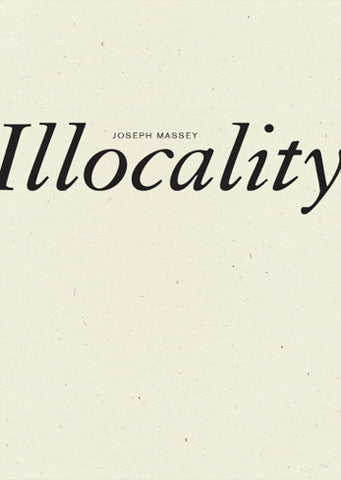
As I’m sure anyone who reads this blog knows, I’m in the midst of a 10 week (annual!) poetry course being held at the UPenn on Modern and Contemporary American Poetry.  One of the many things I like about the course is how different it is each year.  This year is particularly fresh, with a lot of material I haven’t come across before, including, to my delight, the work of Joseph Massey, whose book Illocality is on its way to me now from the US.  The poem that really got to me was "Polar Low”, and rather than try to summarise it, I’ve put the text of my essay on this poem below, not only because it covers what I want to say about the sparse complexity of this poem, but also because it provides an example of a close reading of a poem - the sort of thing I tend to do when reviewing a book (and why I’m continually drawn to reviewing, and the way it forces me to take time).

I've found a full text version of of this lovely poem here: http://robmclennan.blogspot.com.au/2015/10/joseph-massey-illocality.html.  More on Joe Massey can be found at his website.


The nothing that is: approaching nirvana in Joseph Massey’s "Polar Low”

There’s a precision in Joseph Massey’s “Polar Low,” that owes much to the Imagist tradition.  For one thing, Massey’s “direct treatment” of the trailer is described with stark clarity. The poem could be a painting, with its single image of a “yellow double-wide trailer”.  There is “nothing else”, aside from setting: the winter sun, the snow, and the sparse vegetation. The singularity of this observation and the absence of an ‘observing self’ is pure Imagism. The contrast of the colours between the yellow trailer and the white snow becomes luxurious in such a desolate scene, calling to mind William Carlos Williams’ “The Red Wheelbarrow”.  However, there is much in this work that takes it outside of the Imagist tradition.

The colours themselves are more than what they seem. The yellow of the trailer mirrors the yellow of the winter sun, which has been anthropomorphised into amnesia, while the morning becomes inarticulate.  Suddenly the reader becomes conscious of a human presence, whose suffering (coldness/poverty), and inarticulate amnesia is suffused into the scene by reversal of the pathetic fallacy, as if the human were transforming into the sun and morning rather than the other way around.  The white of the ice sheathing the trailer mirrors, both literally in terms of the light being reflected, and metaphorically in terms of matching, the white of the snow and the implied white of emptiness (the dimming scene as the piece progresses), and perhaps the white of an unwritten page. These “variations” also contrast with the green/brown of the winter thicket, a dying remnant of spring.

Rhythm is created by repetition of sound and structure, with short couplets that don’t necessarily couple up.  The first stanza has two hyphenated constructions, which are semantically opposite—half-sheathed versus double-wide—as well as being metrically and syllabically reversed.  The word “mirrors” also becomes a connector linking the trailer with the much more abstract morning – disparate images equated.  Massey uses punctuation between stanzas to slow the reading down and force a pause for reflection at each full stop.  We stop after morning as almost a shudder in our movement across the scene, and then again after sun, so that the two phrases, “The inarticulate morning” and “The amnesiac sun” are paralleled rhythmically and semantically, creating a breathlike quality to the reading.

The next sentence begins with the conjunction “And”, the point at which the poem begins to move, the trailer receding. The repetition of sound becomes stronger here, taking on a more regular rhythm that doesn’t pause until we reach (the) “perimeter”, creating a meditative effect.  This is further heightened by the soft rhymes of thin, dim, perim-eter.  Alliteration throughout the poem also adds to the deepening of breath, with the m sound in “mirrors", “morning", “amnesiac"; the s sound in “else", “contrast", “these"; the k sound in “thicket" and “choked"; the o sound in “other" and “over"; and the n sound in “noun” and “frozen".  These sonic connections give the poem a deep unity that not only creates motion in the stillness of the scene, but also draws the reader into the inarticulateness - a meaning beyond semantics, as if all we could see is white and all we can hear is our own heartbeat. At this point, the entire poem transforms the present moment itself, rather than the trailer, into its subject, and the dissolving of those names (or “nouns”) into a kind of mindful emptiness or the realisation of non-self, and both the reader and writer’s union with the scene, as the denouement.  

Sunday, January 24, 2016

Poetry Monday: PoemTalk does Allen R Grossman’s My Radiant Eye

I’ve said this before and will no doubt say it again, but Jacket2’s PoemTalk is my favourite podcast.  I  try to listen to every show, not just to discover a new poet, but to listen to the way in which poetry - even poetry that seems cryptic and confusing at first, can be explored, unpicked, and opened out towards its full beauty.  In this issue the team, consisting of Kathryn Hellerstein, Peter Cole, Ariel Resnikoff, and of course, Al Filreis, who drives the discussion, looks at Allen R Grossman’s poem “My Radiant Eye”.  The discussion is informative, including ancillary but relevant information (the “inter text”) to both the poem itself, and to Grossman and the book that contains it, Descartes’ Loneliness, as well as an analysis of many aspects of the poem - its resonances, its “way of seeing”, the meta-poetic elements of the piece, the  and the revelations.  I think it was Cole who said:  [This is] “a poem of retrospection...a eulogy for the lone poet.  The theatre of the absurd within the drama of the poem  is what redeems the impossible situation the he finds himself in.”

You can listen to the episode of PoemTalk here: https://jacket2.org/podcasts/laurel-crown-poemtalk-96

The full text of My Radiant Eye can be found at Google Books.  Here’s a taste:

Or is it on account of my radiant eye
I have lived so long--I never slept

in the study hall, or called anyone
by an improper name. I never urinated in

a desolate synagogue.  I never ate or drink
in a desolate synagogue or picked my teeth.

Sunday, April 27, 2014

Poetry Monday: Tracy K Smith (again) reading from Life on Mars

I've written on Tracy K Smith before, and no doubt I'll write about her again.  Her poetry draws me back repeatedly for the sheer beauty and power of her words, for how much of it I recognise, culturally, politically, in terms of my own experiences, background, and interests, and above all else, because it's about as fun as poetry gets, moving easily between pop culture and the most simultaneously erudite and wrought emotional response. Moving between linguistic prowess and raw emotion is an acrobatic feat that Smith manages perfectly.  There's nothing I don't like about her 2012 Pulitzer Prize winning book Life on Mars.  Here she is reading here from a portion of her poem "My God, It's Full of Stars". In case you didn't recognise it, the line is from Clarke's 2001: A Space Odyssey (a book and at times, film, that features a number of times in Life on Mars) and refers to the inside of the monolith found on Saturn. 

Perhaps the great error is believing we’re alone,
That the others have come and gone—a momentary blip—
When all along, space might be choc-full of traffic,
Bursting at the seams with energy we neither feel
Nor see, flush against us, living, dying, deciding,
Setting solid feet down on planets everywhere,
Smith is reading at the Kelly Writers House, a wonderful facility based at the University of Pennsylvania.  The KWH describes itself as encouraging literary communitarianism, and true to its self-definition, it hosts some 150 literary events a semester, as well as having an open door policy that attracts some 500 visitors a week, writing, collaborating, talking about and creating contemporary literature.  If you're lucky enough to live near PA, you'll want to drop in.  If not, they do some pretty wonderful webcasts.

Monday, October 7, 2013

Poetry Monday: Rochelle Owens

Rochelle Owen is a poet, playwright, translator and video artist who has published, among many other things, eighteen books of poetry, the latest of which is Out of Ur just released by Shearsman Books. 

Out of Ur is an extraordinary collection of new work and older work taken from the period between 1961 and 2012. The poems meld classicism with a post-modern sharpness. The work is simultaneously lyrical and starkly confronting.  The poems, which I'm still in the process of reading, take the reader in multiple directions, sometimes at the same time - moving outward to places like the streets of Marrakech, and inward into the brain or the makings of the creative process. Observation and realism mingle with meta-poeticism. It's dense and satisfying work that I'm looking forward to spending more time with.

The PennSound page on Rochelle Owens is a treasure trove of MP3s, videos and text collected from a variety of readings, which will no doubt be augmented by the upcoming reading by Rochelle and her equally illustrious husband George Economou at the Kelly Writers House in Pennsylvania on Thurs the 17th of Oct at 6pm (Arts Cafe if you're in the area).  The following little excerpt is from the poem "The Glacier" which is published in its entirety in Out of Ur:

‘Green the gardens of Tuscany’
the word ‘avore’ tattood on her forehead snow forming ice
the glacier expanding outward outward moving slowly slowly

lumps of ice tilting twisting rows of words order of words

‘Green the gardens of Tuscany’
parts of words
the word ‘abandon’ stuck in her throat lovely the letters like roots
spirals of roots multicellular
slender pliant twigs
lovely the letters like arteries


Monday, July 15, 2013

Poetry Monday: Vox Americana on Poetica

Photo Credit: Inky Bob,
Flickr Creative Commons
Photo Credit: Melissa Zexter
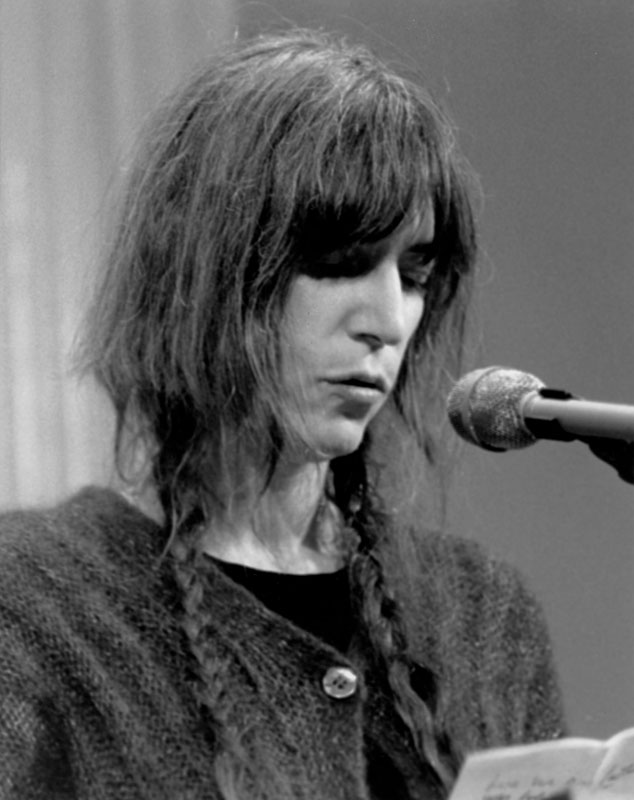
This Poetry Monday I have to draw your attention to the amazing Radio National Poetica. Produced by Mike Ladd, himself a fine poet, the show is always full of rich poetry read beautifully and peppered with music, commentary, and sound effects to give that full body experience.  The show is aways a joy to listen to (and I'm not at all biased by the fact that they once read a poem from my book Repulsion Thrust on the show), but the current two part series is like an encapsulation of my late teen years and made me hugely nostalgic. Sitting somewhere between poetry and rock and roll, the show is a sensory overload of beatnik New York City, moving between Tom Waits, Lawrence Ferlinghetti, Patti Smith, Iggy Pop (didn't know he was a poet, did you?), Allen Ginsburg, Leonard Cohen, William S Burroughs and lots of others. I felt like I was back in the bleachers at the St Mark's Poetry Project. Grab your beret and a cup of black coffee and you're ready to go.

Here's Part One:
http://www.abc.net.au/radionational/programs/poetica/vox-americana-part-one/4616170
Part Two:
http://www.abc.net.au/radionational/programs/poetica/vox-americana-part-two/4616192

Sunday, September 9, 2012

Poetry Monday: Emily Dickinson

ModPo is here! We're just about to begin the 10 week long course in Modern and Contemporary poetry (30,000 worldwide participants and rising! Who says poetry isn't popular?) and I'm afraid you, dear readers, are going to be following my updates every (poetry) monday as I talk about the course and what I'm experiencing from it (or at least giving you a taste of the poets I'm enjoying). I'll try and keep things rather brief, but that's not usually my style, so apologies in advance if I go a little overboard. You already know I'm a poetry nerd, and the course is going to be something of a feeding frenzy for me, so forewarned is forearmed.  Now I did tell you last week as we skimmed the surface of Walt Whitman, that Emily D was coming to Poetry Monday this week. One of my earliest exposures to Dickinson was via my dear uncle, who composed the most beautiful version of 101 or "Will There Really Be a Morning". I've had this piece of music in my head all week (with Ricky's voice) and now I'm gifting you with it.  This version is sung by soprano Maria Mascari and played by pianist Ken Dake. Mascari really draws out the longing inherent in the words: the long dark night, and the hunger for clarity and freedom from pain. 


Though the course doesn't start until tomorrow, the Facebook page for it has been extremely active, and instructor Al Filreis posted up a short Dickinson poem (185) with the words "Let's Discuss":

"Faith" is a fine invention
When Gentlemen can see—
But Microscopes are prudent
In an Emergency. 


We had 256 responses to this, and some of these responses changed my perspective of the poem.  My initial response was the obvious (light, tongue-in-cheek) science trumping religion, but Dickinson chooses her words so carefully, and I began to look closer at the fresh way she combines her words and to think about the very female perspective she represents on empirical wisdom, sitting as she does here, between the priest and the doctor.  Look closer, she seems to be telling us to go deeper.  There's more below the surface. Not everything is immediately visible to a "Gentleman's" eye. Feel free to chime in with your own interpretation. Or just enjoy Mascari's exquisite voice on what I think is one of Dickinson's most moving (and accessible) poems.

Monday, August 13, 2012

Poetry Monday: William Carlos Williams' Asphodel, That Greeny Flower

Inspired by the wonderful work of Ellen Mandel in reminding me of some of the giants of poetry that have coloured my perspective, I thought that today I'd feature a poem that I cite often, and that, because it is long and complex is often left out of anthologies and readings.  William Carlos Williams' work is sometimes deceptively simple, but not "Asphodel, That Greeny Flower", which is simultaneously a love poem, an extended apology, a botanical exporation, a rumination the meaning of life, and perhaps most powerfully of all, a meditation on the meaning of art--poetry in particular.  I can't produce it all here - there are copyright restrictions for one thing and it's quite lengthy for another, but I urge you to read the whole of it, maybe several times.  Here are a few excerpts (my favourite bits) to whet your appetite:

Of asphodel, that greeny flower,
  like a buttercup
    upon its branching stem-
save that it's green and wooden-
  I come, my sweet,
    to sing to you.
We lived long together
  a life filled,
    if you will,
with flowers.  So that 
  I was cheered
    when I came first to know
that there were flowers also
  in hell.
 
*************


My heart rouses
  thinking to bring you news
    of something
that concerns you
  and concerns many men.  Look at
    what passes for the new.
You will not find it there but in
  despised poems.
    It is difficult
to get the news from poems
  yet men die miserably every day
    for lack
of what is found there. 
 
For more, you can visit read the entire text at PoemHunter.  You can also read some analyses at the 
University of Illinois' Modern Poetry site.