
Showing posts with label education. Show all posts
Showing posts with label education. Show all posts
Tuesday, November 20, 2012
Impossible Ones: We educated 30 kids!

Thursday, August 9, 2012
Change a life: doing something impossible for literacy
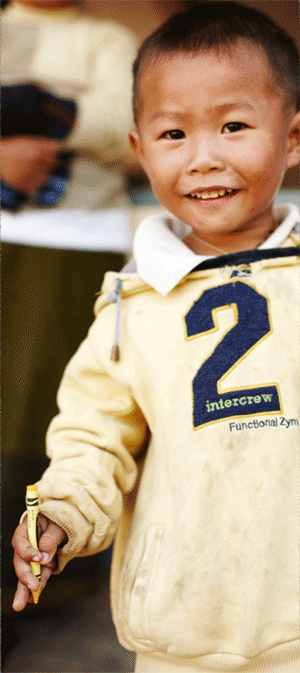
One of the top items on my Impossible List is "get involved on an ongoing basis at a high level with a literacy related charity". Literacy/education is an area that is of utmost importance to me and I've long thought that this was the type of charity that I'd get involved in. Once again, Joel has come to the rescue by putting out the call for his "Impossible League community" to raise $25,000 dollars to build a school in Guatemala in conjunction with Pencils of Promise. PoP has built 50 schools over the past few years and over the next few months, they want to build 50 more. In their own words: "education is a living, breathing entity that with the right nurturing, evolves into something spectacular. We’ve learned that every piece of its growth is a challenge and that each pencil, each dollar, each volunteer is essential." Sounds like a worthy cause for me to begin my own philanthropic journey with. So here's the deal.
I've yet to be paid royalties on my latest novel Black Cow. My publisher has promised payment to all authors in August (hey, it's August now!). Since the opportunity has arisen, I'm going to publically pledge 50% of all the sales that I've made so far and am yet to make on sales of Black Cow to the PoP cause (a cause well aligned with the theme of the book). I don't know how much that will amount to at this stage, but whatever it is - a lot or a little, PoP have got 50% of it. If you'd like to support this great cause and help provide a school for these gorgeous young kids who want only to learn (and get a great read in too that some reviewers have called "life changing", go pick up a copy of BC now - maybe for a friend if you've already got it and join me. Or you can go directly to PoP and contribute to our project here: http://www.pencilsofpromise.org/fundraise/fundraiser?f=a0GU00000050QBQMA2&r=1
or you can help spread the word on your social networks by clicking on one of the little share buttons below.
Thanks for being part of something exciting! I'll update the figure here as soon as I know what it is.
Saturday, August 20, 2011
The Joy of Reading: is it really such a hard sell?
“We shouldn’t teach great books; we should teach a love of reading.” - B.F. Skinner


Last week, in the Chronicle of Higher Education Alan Jacobs raises the old "nature versus nuture" chestnut by stating that it's impossible to teach children to love reading. Taken at face value, Jacobs may have a point. After all, by the time a student reaches university, they've already decided what kind of person they are and attempting to "inculcate the practices of deeply attentive reading" or instill a 'love' is no easy task for a teacher, and may be outside the scope of a class built around a specific text or era. But I have to say that I strongly disagree that genetics are the only indicator of a love of reading and that one either has the reading gene or they don't. Surely if a sense of humour is a learned trait, influenced by family and cultural environment, then a love of reading must also, at least partly, be learned.
Deep love comes, not only with a natural inclination and innate capability for sustained attention to story, but also with positive experiences, ideally those that happen early. I doubt that even the most dedicated genetic ("nature") proponent would argue against the notion that parents can influence a child's feelings towards reading. Reading outloud, early, and with enthusiasm has got to have an impact on how children feel about reading. Living in a household filled with books, enriched with off the cuff quotations, and where the pre-bedtime read-outloud moments are among the most enjoyable times in the day would have to make a huge difference over one where books are considered solely the province of academia - to be used for learning and not entertainment. Once children make that all-important connection between 'story' - the magic of narrative and discovery, and texts, then the move to reading becomes a natural one.
 Of course reading will be easier for some children than others, and that may well be genetically determined.
  As Mem Fox argues beautifully in her book Reading Magic, it is incumbant on parents first, and then teachers, to share their own passions and help children and students make the link between those moments of joy when you immerse into story, and the 'book'. Teaching of literacy has to be infused with love - love for the children and love for the books. Inbue your teaching with meaning, reality, vitality and passion as Fox puts it and children will get it.
I personally started school with an innate great love of reading that was encourage and strengthened by my parents and their early praise of my reading and their own joy of the written text (and I still get that little frisson of pleasure when I read a book like Little Bear, Where the Wild Things Are, or Ping -- books that my parents read to me often when I was very young), but a few great teachers who shared my joy in books strengthened that love considerably. The opposite also might have happened if I had been thrown into classes with bored teachers who passed on their dislike for what they were teaching. Fortunately that didn't happen. To suggest that teachers don't have a truly powerful potential impact on children's love of reading is to severely and incorrectly I think, downplay the value of our teachers. When my sons, both great book lovers, come home from school and tell me that English is boring, it makes steam come out of my ears and a tendency to reach for the phone to call the school. Sustained dullness in a lesson that should be filled with drama, enthusiam and moments of self-recognition, self-expression and greater understanding (and of course laughter) will dampen and put back many a child's love of reading.
By the same token, a wonderful teacher can change the way a child (or student) looks at books - enabling a connection between other forms of entertainment (after all, films and television are often based on stories; popular music is often built on poetry), and awakening a desire for more. So let's not overplay the limitations of genetics and underplay the value of teaching. A good teacher can indeed teach students to love reading, not by having "reading loving lessons", but rather by sharing their own enthusiasm for books, encouraging children in their attempts, and finding existing loves and linking those to the written text.
Subscribe to:
Posts (Atom)