Showing posts with label Australian poetry. Show all posts

Tuesday, November 2, 2021

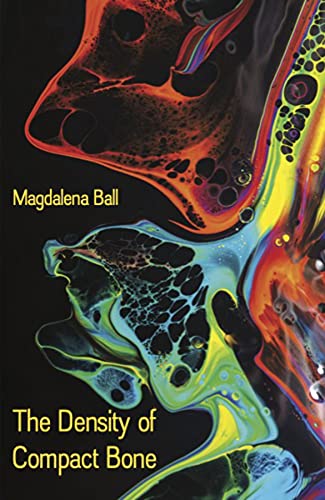
Density of Compact Bone is now Available!

My new poetry book Density of Compact Bone is now available from Ginninderra Press (and good bookstores everywhere - just ask for it, or ask your local library to get it in).  Of the book, the wonderful Ivy Ireland says:

“The poems of Magdalena Ball’s The Density of Compact Bone are utterly visceral, sometimes temporal, but never quite ephemeral – lines will ring out in waves inside the mind long after the final page has been turned. These poems are not only haunting, but haunted: by the sense of something undetermined gone missing and also by what is known to be lost. These are poems explored through the body; internal, intimate and yet filled with paradigmatic shifts: from personal grief to global keening, from the blurred landscape of raw human feeling to the clear data of exacting scientific analysis. Apocalypse is rife here, but this collection moves beyond a dissection of our end times. These poems are intelligent – at times almost mordantly so – meticulously crafted and ontologically restless, yet somehow Ball’s humour, unassuming warmth, and varied musings on the movement of birds, the colour of planets or the buzzing of bees, leaves the reader feeling as though they have been gifted a potent balm for the relentless wounding ubiquitous here in the Anthropocene.”

To purchase, visit Ginninderra Press: https://www.ginninderrapress.com.au/store.php?product/page/2354/Magdalena+Ball+%2F+The+Density+of+Compact+Bone

Or from Amazon: https://www.amazon.com/Density-Compact-Bone-Magdalena-Ball/dp/1761091867/ref=tmm_pap_swatch_0?_encoding=UTF8&qid=&sr=

Both hard copies and ebooks available.  If you are a reviewer, journalist, educator or run a book club and want me to talk or read (free), please contact me. 

Monday, January 16, 2017

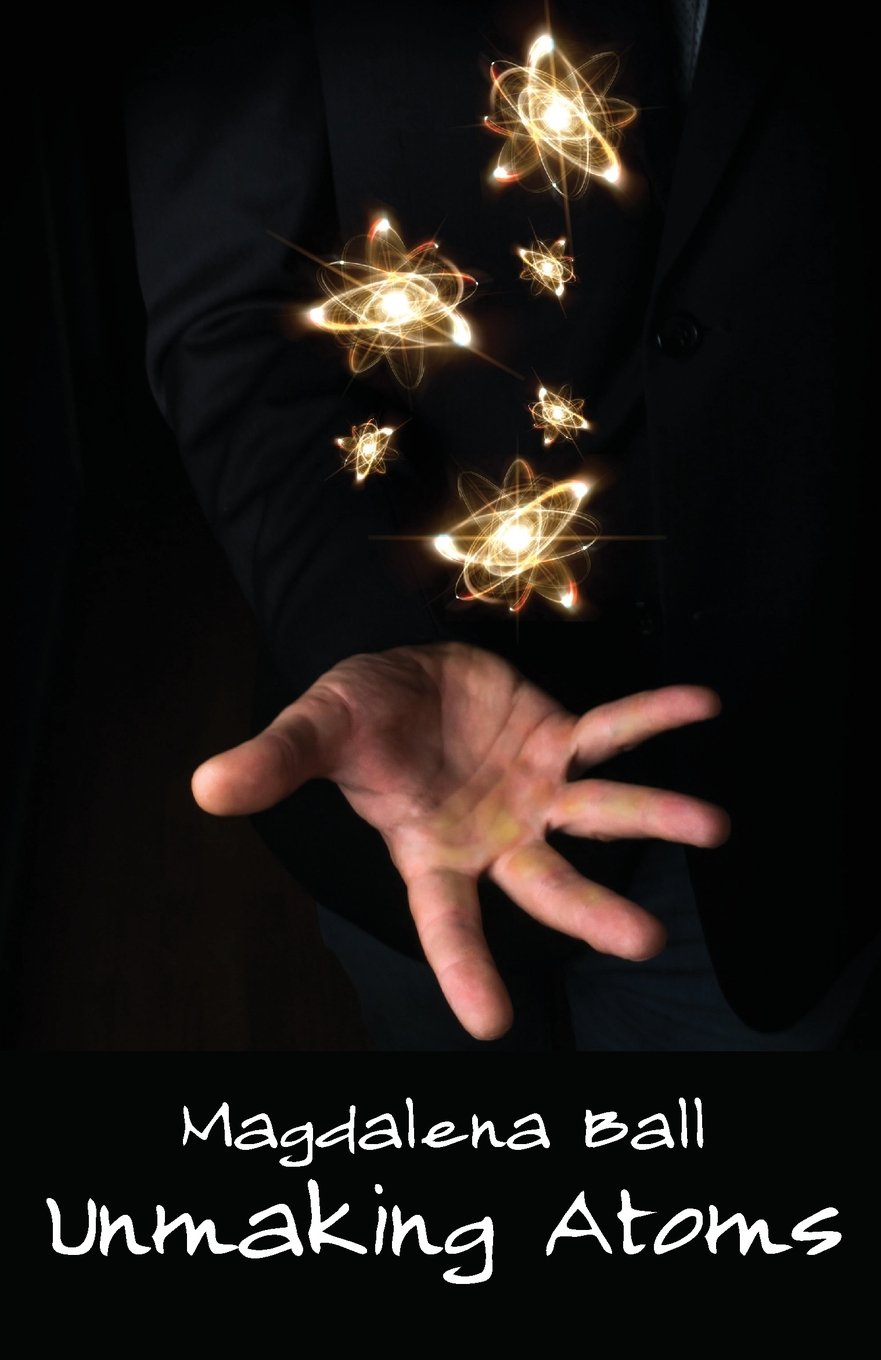
Poetry Monday: Unmaking Atoms!

Hi Everyone, I’m excited to report that my new poetry book Unmaking Atoms is now out and available at good bookstores everywhere including Amazon.

I’ve recorded one of the poems in the book titled "Mapping Pluto” which you can listen to here: https://soundcloud.com/maggieball/mapping-pluto-by-magdalena-ball

Of the book, the fabulous Kristin J Johnson said: "However, matter cannot be created or destroyed, and this collection unmakes, and then reassembles, the words and images as well as emotions including the sense of joy that permeates Ball’s lyricism. That joy manifests in a “laugh that shakes the floor,” the line and curve that brings wholeness, a light “softer than the cut of love.”

Bob Rich said: "These are pearls in words; beautiful images in beautiful expressions. They force you to think. There is a kaleidoscope of different ways, all pointing to the same theme. You can immerse yourself in each of 96 offerings like this -- except that no two are alike. Each is a cryptic crossword in 17 dimensions, chasing each other out of sight, a carefully designed Rorschach blot.”

The book will be formally launched at this year’s Newcastle Writers Festival at the Press Book House by the magnificent poet Jan Dean.  Stay tuned for more upcoming events, videos, and giveaways.

Monday, July 11, 2016

Poetry Monday: Joel Deane’s Year of the Wasp

I’ve just finished my first (and definitely not my last) reading of Joel Deane’s Year of the Wasp.  I’ll be writing a much longer review shortly, but can’t wait to talk about it.  The book is relatively short at 55 pages, but is dense, rich, intense.  The poems focus around the central theme of aphasia: Joel’s 2012 stroke and his struggle not only to renegotiate his language but to reevaluate the world and what it means to make sense in the aftermath.  The result is stunning, moving imperceptibly between the personal and the political, and creating new meaning in the gaps between language and sensation:
                 Night rain sweeps
from the west,
wearing a slip
                of silken smoke
                                   to mask memories.
For more, you can read three excerpts from Year of the Wasp at Verity La:
http://verityla.com/poems-from-year-of-the-wasp-joel-deane/.  Joel and I will be chatting on air early next month at Compulsive Reader Talks.


Monday, June 20, 2016

Poetry Monday: Hazel Smith’s Word Migrants

I’ve just started reading Hazel Smith’s Word Migrants and am already hooked by the richness of the poetry’s presentation: performative modernity coupled with an almost painful intimacy:
Before you disappeared my aloneness was the vibrations of a coastline, I could feel the pitches of the waves beneath my feet. Now the soles of my feet sink into the sand.  And it sticks. (“The Disappeared”)

Smith's The Writing Experiment is one of the best writing manuals available for teaching writers the techniques of experimentation (I use it regularly), and it’s fascinating to see some of those principles in play in Smith’s own poetry as she explores topical issues include the refugee crisis, climate change, political and social abuses, aging, grief, and the nature of privilege and power.

The poems I’ve read so far maintain a lovely delicacy, drawing the reader into worlds which are often dystopian (all too real at times), but also playful, experimental, enlivened by sound and an awareness of the space on the page, exploring the nature of language, semantics, referentiality, and genre, without ever losing their immediacy, contextual relevancy, or coherence.  Here’s another little sample:
Every conversation is a gentle misfiring
   An abacus points beyond method or counting
      An exchange derails, eyes averted, glancing (“Encounter”)
I’ll be reading more deeply over the next week or so and will follow with a full review at Compulsive Reader.  In the meantime, you can found out more about Hazel Smith here: http://www.australysis.com

Sunday, May 29, 2016

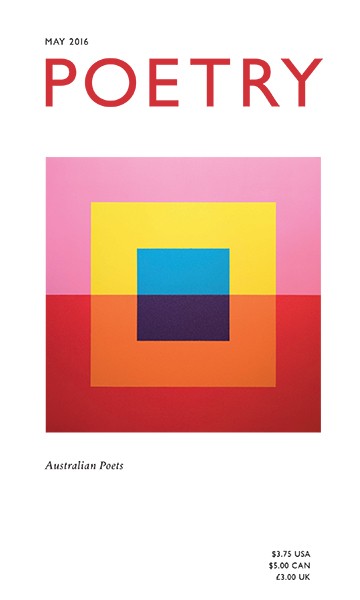
Poetry Monday: Poetry Magazine’s Australian issue

This is a bit late, as I decided to write about the May issue of Poetry Magazine some weeks ago and got waylaid by a few other literary activities.  This month’s issue was guest edited by Robert Adamson, one of Australia’s best known contemporary poets, and features beautiful portraits from Juno Gemes.  If you aren’t already familiar with the fresh, often beautiful, sometimes shockingly uncomfortable poetry being produced from Australian writers at the moment, this issue is an excellent place to start, as it features the work of some of the most innovative and powerful poets writing today including Bonny Cassidy, Ali Cobby Eckermann, Jaya Savige, Gig Ryan, Robbie Coburn, Luke Davies, Lisa Gorton, Anthony Lawrence, and many others.  If you are already familiar, then you’ll know this issue is a massive treat, full of rich and powerful work.  But don’t take my word for it.  Drop over the website and listen to the podcast, which includes poets like Lionel Fogerty, Jaya Savige and Ali Cobby Eckermann reading from their own work in a way that adds a great deal of depth to the poems.  There’s not a single poem in this collection which isn’t exquisite and moving.  Some, like Luke Davies’ "Heisenberg Saying Goodbye to Mum at Lilyfield”, or Lisa Gorton’s “Empirical IV” left me struggling to swallow from the lump in my throat.  But to pick and choose a few poems to highlight would not be appropriate.  Every single one of these poems deserves to be read slowly, savoured and pondered.  Adamson has done a superb job with his selections.  Podcast is here: http://www.poetryfoundation.org/poetrymagazine

You can also check out each poem via the table of contents or subscribe here: http://www.poetryfoundation.org/poetrymagazine/toc/detail/88998


Monday, February 8, 2016

Poetry Monday: Justin Lowe’s Nightswim

have to admit that an electronic copy of Nightswim has been sitting on my laptop for many months now, patiently awaiting my much distracted attention.  Author Justin Lowe runs the phenomenal poetry site Bluepepper and has become something of a cornerstone in Australian poetry as both poet and publisher. The poems in his 6th collection, Nightswim, cover a lot of ground - from notions of home, aging, death, ghosts (a recurring theme), travel, the nature and power of poetry, poems of place, of the environment, loss, an ode to other poets, and above all, love.  Many of the poems in this collection are about love, and not just eros, but also Philia or friendship, Ludus or playful love, and Agape or selfless love.  Full review to follow now that I’ve charged up the Kindle, but in the meantime, here’s a little taste - just a few stanzas from “Vallejo”:

I have spoken to the ghosts:
they are clear on my predicament

coming in out of the sun
into the cool, dark void,

I glimpse them briefly
hunched around my table,

dabbing at crumbs
that will not rise to their lips.

If you want more, autographed copies of the book (which could be a perfect valentines day gift if you’re struggling) are available directly from: http://www.thecarnivalbookstore.blogspot.com.au

Monday, November 30, 2015

Poetry Monday: Anna Kerdijk Nicholson’s Everyday Epic

I’ve always thought that legal language and poetry were somewhat inimical to one another. Legal language is all about exactness, authority, and the weight of historical context. There’s no place for imagery, co-existance of multiple meanings, and vagaries.  Instead legal language tends towards the use of precise technical terms with Latin roots, phrasal verbs, and pronominal adverbs, none of which tend to work so well in poetry. Anna Kerdijk Nicholson is a rare blend of lawyer and poet, making full use of her awareness of language and it’s real-life importance, but allowing the full multiplicity of poetry’s linguistic and demilitarisation qualities to shine in her poetic work.  Kerdijk Nicholason makes full use of her linguistic skills in her new book Everyday Epic, exploring globally relevant current affairs and domestic scenes with the subtlety and complexity of a poet’s awareness of the difficulty of communication and the need for multiplicity in meanings.  Everyday Epic explores both the grand events of history such as the not-so-everyday epic of Burke & Wills, immigration, current affairs, but also a number of poems that explore cross-media including ekphrasis, love, grief, the beauty and occasional terror of the domestic front, and perhaps above all, the nature of language - its limits, its potential, its rhythms, and the way we can create new spaces through it.  For example,
this little taster from the poem "Although,”:
I step on the interstices
and sing in your hollows
you resound on me
and refract
I’m in discourse
although alone
I’ve yet to fully and deeply explore this collection in the way I like to with poetry: reading and re-reading, allowing time for the work to come around with me, and permeate the way I perceive things.  I’m doing that now, and enjoying it very much.  More soon.

Monday, October 26, 2015

Poetry Monday: Ouyang Yu’s Fainting with Freedom

One of the things I like to do when I get a new book is to get the measure of the thing.  I like to look the whole book over, skim through the pages, get a feel for its girth, its style, its feel.  This is particularly the case with poetry.  I like to orient myself to the book and have a few tasters before I go in again more slowly, taking each poem in turn.  That’s what Poetry Monday is all about: the initial reading before the reading.  I also like to think of it as my little own version of “gathering paradise”, to steal a phrase from my favourite poetry site PoemTalk, where it was nicked, of course, from Emily Dickinson’s “I dwell in Possibility”.  It’s a little bit of poetry paradise into which I’m about to immerse myself.

As the author of some 75 (!) books of poetry, fiction, nonfiction, translation and criticism (the number continues to grow), Ouyang Yu’s literary influence is undisputed.

I interviewed Ouyang Yu back in 2007, after he published his book On the Smell of an Oily Rag.  During that time, he told me that the wasn’t in  the habit of putting himself into pigeon holes: "I might as well call myself a poetnovelisttranslatoressayistcritic". I think that label, if one were required (of course it isn’t), could be applied to his new book Fainting with Freedom.  Many of the poems read like little stories or narratives, full of (often subversive) fun, dismay, intensity, longing, and Ouyang Yu’s characteristic word play that always breaks linguistic boundaries.

Here’s a very brief sample:
Hills flow in wavelets, brown-green, yellow-red, pink-dark.  Empty sticks of trees, through which glimpses of clouds topping the hills.  One lone tree, another, another, a shadow stretching across the tableland, darkening the feeding sheep.  Dots of grey.  Sudden water sky. (“Biography”)
Full review, as always, to follow.

Monday, August 17, 2015

Poetry Monday: Martin Langford’s ground

I’m very lucky in that I get lots of new poetry books sent to me.  I hope I never become so spoilt or jaded that I lose the excitement I get when opening up a new one - the sense of adventure it contains, the silky feel of the cover as I crack the spine open and begin exploring new words, full of promise, of new worlds - like a kind of travelogue into the human condition.  Martin Langford’s ground is a bit like that.  Though I have yet to fully digest it, the poetry takes the reader through so many shades - not just actual places, though there are plenty of those - all throughout Victoria and Tasmania and especially Sydney, with its “Layers” and lines, but through times and themes, colours and historical moments - sometimes pastoral, sometimes post-modern apocalyptic, always mingling personal perception and political impact. Many of the poems concatenate place, event and multiple interpretation into a single space--a plane of semblance that builds towards cumulative meaning (“as if there were only this moment of grassed undulations.” (“Looking East from the Castlereigh (London, 1820)”). 

I have a feeling that many of these poems will take time to open out fully for me, as is often the case with good poetry, though they’re eerily beautiful and engaging on first reading.  Here’s a very small sample:

From “The Detectives of Light”

For years at a time
they had breasted the could-dreams of shorelines -
the sky-bleed the storms -

and now they were home, the detectives of light,
shuffling, in rooms thick with interests:
boxes of artefacts, orchids;
charts dense with patronage;
moonrise distilled into ink -- (19)

Monday, July 27, 2015

Poetry Monday: Lucy Dougan talks

I had the pleasure of talking with poet Lucy Dougan on my radio show, The Compulsive Reader Talks, today.  In addition to reading five exquisite poems from her new book The Guardians, Lucy talked with me about a wide range of topics. This included such things as the notion of masks as roles, poetry as archeology that uncovers layers of ourselves, genetic inheritance, poetry as a way of looking at biology, the metaphoric use she makes of animals, including her well-trained mice, poetry as craft and craft as poetry, on the subtle humour that runs through her work, on Agape or selfless love and its power, and the nature of health.  You can drop by for a listen here:
http://www.blogtalkradio.com/compulsivereader/2015/07/27/lucy-dougan-on-the-guardians-1
or click on the widget to the right on this blog or at The Compulsive Reader.

Monday, June 29, 2015

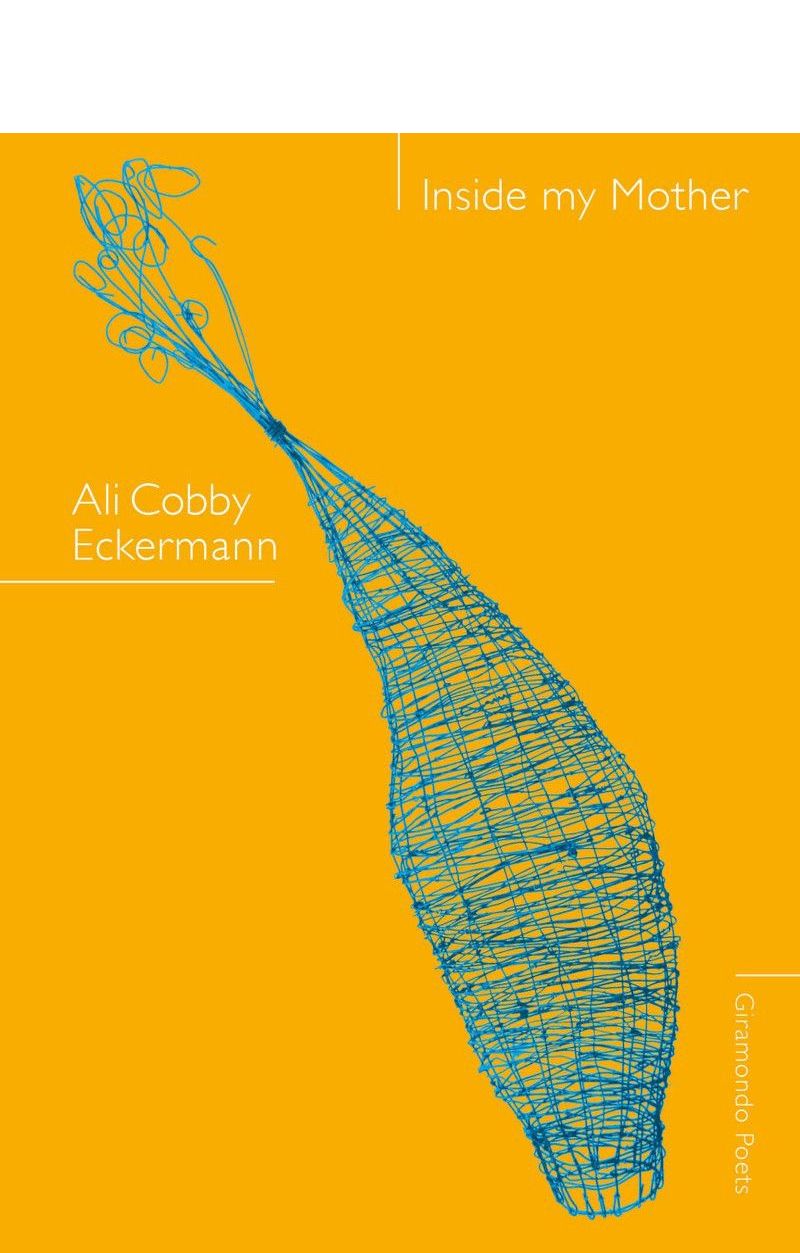
Poetry Monday: Ali Cobby Eckermann’s Inside My Mother

I know it’s not Monday where I am, but my blog, being on US time, still says it’s monday, so I’m going to take the opportunity to showcase a poetry book that is being published tomorrow.  Some weeks ago I blogged about a poetry session My Mother’s Heart that I attended at the Sydney Writers Festival.  Ali Cobby Eckermann’s new poetry book, from which she read, has now arrived, and at first glance, I’m very excited by it.  The work is rooted in the earth, and rich with legend, many stories, love, fear, loss, lost vernacular, a beautiful, and at times terrible history, healing, and as the title suggests, the nature of the maternal, in all its metaphoric implications.  I’ve only skimmed the surface so far, but I’m looking forward to reading through it slowly and deeply and finding new meaning, and new ways of looking at the world through this work:

“there’s a whole ocean filled with sand
between what was and what will be”

More about Ali Cobby Eckermann and her work can be found in this recent interview at Mascara Review: http://mascarareview.com/ali-cobby-eckermann-in-conversation-with-jaydeep-sarangi/

The book is available, from tomorrow, directly from Giramondo.

Sunday, June 7, 2015

Poetry Monday: Australia Poetry Podcast at Regime Books

It’s a public holiday monday and you might just be lucky enough to have a few minutes available to listen to poetry and to poets talking about poetry. Not too long ago, Australian publisher Regime Books started a poetry podcast, in part as an antidote to the loss of ABC’s Poetica earlier this year, and they’re now on their sixth episode, featuring none other than MTC Cronin.  Cronin joins Robbie Coburn and Nathan Hondros from her organic farm (chooks, ducks, foxes and all), and talks about such things as thinking vs emotions, where her poetry comes from, motivation, about the nature of metaphor: “if you go into words--even if you go into a single word--you can probably follow it to another word...if you can find some way to really look at them and really get inside them you can find how things are connected to everything else”, on criticism (and where it fails), the relationship between poetry and law, the roots of words and language, on the joy of reading other people’s work: “I’d like to write certain things but haven’t been able to...”, her new book The Law of Poetry, on the nature of publication “if you put a book out, not many people are going to read it...”, and quite a few other things. She also reads a number of poems from her book: “The Wonderful Lawlessness of God”, “The Law of Wine”, “The Law of the Wound”, and a few others. You can hear the whole thing, which is just over an hour (about the time it took me to make bagels this morning, which was perfect), here:
http://www.regimebooks.com.au/mtc-cronin-on-the-australia-poetry-podcast/

Monday, May 18, 2015

Poetry Monday: Lucy Dougan

I met Lucy Dougan at a friend’s house nearly 20 years ago.  At that time she was already a published poet, though her first full collection Memory Shell wasn’t yet out.  I might be wrong (memory being what it is), but I recall her having a young child with her at the time. She was introduced to me as someone I should know - a fellow poet, and though I hadn’t yet heard of her, I’ve been following Dougan’s work since then with a great deal of admiration.  Her new book The Guardians just arrived in my letterbox.  As with Dougan’s other books, the themes in this one all resonate with me: genetic inheritance, illness and healing, the fuzzy link between the domestic and the universal, the interstices, absences and spaces that create moments of re-written meaning: “I rewrite my life/in grass-green drizzle round the rim” ("Nettle Soup”).  Reading “Mask,” the first poem in the book, I immediately thought of Hélène Cixous’ écriture féminine - this notion of writing through the female body of sensation - not just joyful, but painful too.  In “Wayside”, which opens with a Cixous epigraph, Dougan writes:
My body wants
the long way back
just to find lost land
rehearsing what it will be -
unexpected flowerings
locked tight in seeds.  (12)
Doug’s work is as tender as it is fierce, and I’m looking forward to exploring it more fully.

Monday, April 20, 2015

Poetry Monday: Judith Beveridge

I’ve just finished reading Devadatta’s Poems by Judith Beveridge.  The book reads like a verse novel, following a period of time in the life of of Devadatta, cousin of Siddhattha Gotama (the Buddha).  Devadatta was initially a devotee of his cousin, and joined his order of monks, but later began to hate him, even going so far as to attempt to kill him several times.  The book reads quickly and because it’s in Devadatta’s voice, it creates an alternative history in which a fictionalised Devadatta is revealed with all sorts of desires and longings.  The result is a compelling and very sensual reading that is rich with the sights, smells, sounds and  sensations of India around 500 BCE.  You can read three full poems from Devadatta’s Poems here: http://www.judithbeveridge.com/books-and-sample-poems/2-devadattas-poems-2014.  Here’s a tiny except from “New Day”, which really picks up the character of Beveridge’s Devadatta:
I will walk into town with my alms bowl. The wind
seems to chant: food, fodder fibre, flowers, fuel.As I walk, there’s the tang of caraway, the grassy
scent of sorrel, the subtle sweetness of thyme. 
Beveridge, who has published eight books of poetry (6 full and 2 chapbooks), is a judge in this year’s Newcastle Poetry Prize, and will be in conversation with Les Murray at the Sydney Writer’s Festival. She has won most major poetry prizes for her work, including the Christopher Brennan Award for lifetime achievement in poetry. She’s also the poetry editor of Meanjin - a very significant literary magazine that will be celebrating its 75th anniversary this year.  I’ll be writing a full review of Devadatta’s Poems shortly, but in the meantime, you can read more samples of Beveridge’s  exquisite poetry here: http://www.judithbeveridge.com/books-and-sample-poems/

Monday, September 22, 2014

Poetry Monday: Jeri Kroll

Sometimes on a Friday afternoon, as a kind of preparation for poetry Monday, I like to run my fingers along the poetry section of my bookshelf, eyes glazed as if I were feeling braille.  I have so many appealing looking poetry books (and more arriving daily) that I haven't yet read, with names that might or might not be familiar to me.  I'll usually just pick one up that seems to feel right against my hands, and begin reading.  Sometimes the poetry isn't right for my mood, so I put it back and try again.  This Friday I picked up Jeri Kroll's workshopping the heart.  I was instantly  drawn by the themes of Kroll's work: parenting, aging, the continual bisection of love, grief, and loss, and the relationship between the universe, nature and the human. So much of this work resonated immediately with my own experience and emotions at the moment.  And this was before I knew that Kroll was a NYC girl who spent summers in the Catskill mountains, whose mother was a singer, and who now lives in Australia.  Obviously we have similar reference points, and if she were in NSW, I'd invite her to dinner immediately.  As it is, I'm going to email her publisher (Wakefield Press) and line up an interview (I'll let you know when...). Workshopping the Heart includes selections from her seven previous collections, poems from 2005 to 2012, and excerpts from her forthcoming verse novel, Vanishing Point.  Here's a little taste taken from her poem "Eavesdropping" (how can I resist a poem set at Tidbinbilla's Deep Space Tracking Centre): 

On a noisy planet, Australia rates as quiet.
The radio telescope is set to scan
the silent skies. Scientists link up
around the world.  Soon the whoosh of space 
appears on their computer screens.
They have 'seen' the pulse of emptiness.
They want a new vibration from some extraterrestrial heart.

The universe sounds like a distant wind
with nothing to bang or rustle.
We invent a door, push it ajar,
and wait to hear it rattle. 

Monday, June 2, 2014

Poetry Monday: Andy Kissane

I really wasn't intending on reading Andy Kissane's Radiance for a while.  I'm in the middle of a few other books (including quite a challenging poetry book that is absorbing my attention), but since Kissane queried me himself, and since the book was published by Puncher & Wattmann, a local house that I respect greatly, I thought I'd just give it a quick leaf through (something I often do with new books - almost a reflex action). Before I knew it I was hooked and pushed everything else aside. There are a few reasons for that.  The first is that the poetry is actually very easy to read and drew me in immediately.  I'm not saying that poetry necessarily should be easy - I'm  not afraid of a literary challenge, but it's been a particularly hard couple of weeks, I'm a little tired, and I found the ease in Radiance appealing, especially since the accessibility didn't diminish the depth or power of this work in any way.  Another reason is the humour.  This work is wry.  I was really smiling, especially since the humour didn't diminish the pathos.  Finally (not really finally, because there are lots more things to say...), the work was meta-poetic, self-referential, and modern without losing its link with a strong poetic tradition.  I particularly like the work in Section II (what I've taken to calling "Oatmeal" because of its epitaph), some of which collectively shortlisted for the 2011 Newcastle Poetry Prize.

So far I've been unable to resist reading out loud (to the poor folk who have to live with me) "The Lost Ode of John Keats", "The Catch", and "Three Visions of Virginia Woolf."  If you happen to be in my vicinity, "Political Fruit" is most likely going to come spouting out next.  Fair warning.  Here's a tiny taste from "Rhubarb", which won Kissane the 2012 Coriole National Wine Poetry Prize.  More soon. 

Stewed with apples you give life to cereal,
you populate pies, you fold through whipped
cream with the swirling intelligence of a fool.

Is that why when we've nothing to say,
when we need to fill the air with dramatic chatter,
we utter your name: rhubarb, rhubarb, rhubarb?

Monday, May 12, 2014

Poetry Monday: Michael Brennan

I've been reading Michael Brennan's Autoethnographic.  It's a strange, somewhat confronting experience. These little prose poems pack a punch, taking me places I'm not always keen to go, and opening doors philosophically, linguistically, and at times, viscerally.  They're mini-stories that use fairly standard sentence structure, but break past that into what is often hallucinatory, forcing the reader to look under the skin, beneath the surface of dialogue, conflict, characterisation and plot, and find something a little more complex and rich.  Here's one example from "Authentic":
There is no one to save us from these microbes, the shuffling deck. So many points on/our horizon we could launch out from the/random mutation we share.  Onwards then, until we find each other ready-made and to order.
I've only just begin plunging into this book, which is as fun as it is intense.  The sensibility is very modern, moving between the joy and terror of the circus, to social networks, texting, global warming, Tag Hauer watches to the Dalai Lama. I've still got a a long way to go with the book, but I'm finding the reading quite exhilarating at this stage.  If you want more, here's a complete piece from the book titled "Who is Alibi Wednesday": http://redroomcompany.org/poem/michael-brennan/who-alibi-wednesday/  that takes a rather shocking (and moving) look at the migrant experience: "When you feel the blade's tongue lick your throat,/you are still giddily scratching surfaces, falling in love with the city."

Cognitive dissonance here we come. Autoethnographic is Brennan's third full length collection. He is a lecturer in the Faculty of Policy Studies, Chuo University, Tokyo, and is the director of Vagabond Press, and the Australian editor of Poetry International Web.

Monday, April 14, 2014

Poetry Monday: Maria Takolander's The End of the World

Maria Takolander's poetry seems to be both lush and spare at the same time. As the title of her new poetry book, The End of the World, suggests, the poems have an apocalyptic feel, taking us forward to a world where the "game is over"; the excesses and villainy of our past has wrecked the future, even as it explores the past with archeological fervor. While the scope of the book is grand, taking in a kind of chequered history of the human race and its foibles, a transcendent beauty continues to shine through, mostly in domestic moments:

"...next to my body you hulk and settle. There you lie,
strangely hungerless, intense as a nucleus.

alive with an intelligence of I know not what.
Men wage war to make something this real,

but it was life, pure and gluttonous, that committed
this glorious violence upon you and me."

Takolander's vision is taut, dark and powerful, moving easily between a micro and macro perspective that eliminates the dichotomy and shifts the point of transition and power from the grand sweep to minutae. Though I've yet to fully delve into every poem in this book (which I've only just received), The End of the World has drawn me in quickly, particularly the first part, which explores childbirth and motherhood in a way that is entirely unsentimental and as intense and beautiful as it is painful and fraught. Without losing any of the seriousness or density of her subjects, Takolander manages a sharp, black humour that weaves its way through the book.  The poet is a degenerate, and "those hysterics moved by her influence/are already, ipso facto, degenerate subjects".   Indeed.  I look forward to developing my hysteria and delving more deeply into the degenerate (and "perplexingly beautiful") poems that make up The End of the World. 

Monday, March 10, 2014

Poetry Monday: Christopher Pollnitz

If you read last week's post you'll know that one of  the wonderful people joining me for the How Do Poets Survive session at this year's Newcastle Writer's Festival is Christopher Pollnitz.  Pollnitz is not only a fine poet himself (as I'll be showing you in a moment), he's a lecturer in English at Newcastle University, as well as being a noted Lawrencian.  We're not talking about Lady Chatterly's Lover here.  Pollnitz has edited one of the most critical editions of D. H. Lawrence’s Poems, and he is now working on Volume III, which features Lawrence’s draft and uncollected poetry (something I can imagine as a massive undertaking that is as much creation as curation).  He is also one of the original founders of the very well-respected Newcastle Poetry Prize.  Pollnitz' own work has been published by Rob Riel's Picaro Press which we'll be looking at next week.  Just for a taste, here is one stanza from Pollnitz' poem "Satin Bower Bird" which can be read in its entirety (along with other work) in the December issue of Mascara: http://mascarareview.com/christopher-pollnitz-2/

"Black Prince of the undergrowth, to me his crackle
and hiss seem off-station, but you and he have a
thing together.  As I finish each two litres
of juice, you put the lids out in the garden
and your pretty boy comes again and again carrying
awkwardly off in his beak the royal blue baubles." 


Dare I say that the influence of Lawrence's work on Pollnitz is strong - involving the same taut observation, the same anthropomorphism, the same meta-poetic twist as the awareness of human conceit and the artistic process is played against the natural world.  Here is Lawrence's "Eagle in New Mexico" which is taken from the sumptuous hardcover edition of The Cambridge Edition of the Works of D.H. Lawrence: The Poems by Christopher Pollnitz (click on the cover to be taken to the Amazon page for the book - it's quite a beautiful thing:


“Fly off, big bird with a big black back.
Fly slowly away, with a rust of fire in your tail,
Dark as you are on your dark side, eagle of heaven.

Even the sun in heaven can be curbed and hastened at last
By the life in the hearts of men.
And you, great bird, sun-starer, heavy black beak
Can be put out of office as sacrifice bringer."

It's no small compliment.

Sunday, March 2, 2014

Poetry Monday: Pitt Street Poetry

Those of you who have been following this blog for a while will know that last year, in the lead up to the Newcastle Poetry Festival, I ran little profiles of the people who were joining me on my poetry panel - tasters if you will.  This year the topic will be "How Do Poets Survive", and I'll be chatting with David Musgrave, who was also on my poetry panel last year, Christopher Pollnitz, Rob Riel, and John Knight of Pitt Street Poetry.  This is a free event held onMulubinba Room - Newcastle City Hall, and knowing the work of the amazing poets and poetry publishers who are joining me to discuss the topic of publishing poetry and the dynamic between poet, editor and publisher, I am confident in saying that this will be a session well worth attending, full of lively, topical chatter and lots of opportunity (as with last year) for audience interaction.  Today I'm going to kick off the series with a little profile on John Knight's wonderful Pitt Street Poetry press.
Dr John Knight

Anyone who writes poetry and wants it published will be well aware that there aren't very many traditional publishers out there, and most of them are doing it more for love than for the (somewhat less than copious...) financial rewards. The love is often considerable and the resulting collections exquisite, as is clearly the case with PSP, who started up in 2012 with two collections: Travelling with the Wrong Phrasebook by the amazing Jean Kent (who was on our panel last year - you can search her up in the archives for more on Jean and her work), and Light Pressure by John Foulcher.  Since then, PSP has grown rapidly and now aims to publish 4-6 new collections a year, as well as pocket-sized editions of out-of-print classics from the last fifty years. They've got some pretty big names on their books already including the likes of Luke Davies, Ron Pretty, and Mark Tredinnick- just a few of those you might have heard of, though there are plenty more upcoming poetry collections from names familiar and new, with an eclectic mix of e-books, inexpensive pamphlets, paperbacks, and beautiful casebound illustrated and autographed editions that make lovely gifts. As both writer and reader of poetry, I'm so glad that publishers like PSP are continuing to put out the good stuff.