Sunday, March 2, 2014

Poetry Monday: Pitt Street Poetry

Those of you who have been following this blog for a while will know that last year, in the lead up to the Newcastle Poetry Festival, I ran little profiles of the people who were joining me on my poetry panel - tasters if you will.  This year the topic will be "How Do Poets Survive", and I'll be chatting with David Musgrave, who was also on my poetry panel last year, Christopher Pollnitz, Rob Riel, and John Knight of Pitt Street Poetry.  This is a free event held onMulubinba Room - Newcastle City Hall, and knowing the work of the amazing poets and poetry publishers who are joining me to discuss the topic of publishing poetry and the dynamic between poet, editor and publisher, I am confident in saying that this will be a session well worth attending, full of lively, topical chatter and lots of opportunity (as with last year) for audience interaction.  Today I'm going to kick off the series with a little profile on John Knight's wonderful Pitt Street Poetry press.
Dr John Knight

Anyone who writes poetry and wants it published will be well aware that there aren't very many traditional publishers out there, and most of them are doing it more for love than for the (somewhat less than copious...) financial rewards. The love is often considerable and the resulting collections exquisite, as is clearly the case with PSP, who started up in 2012 with two collections: Travelling with the Wrong Phrasebook by the amazing Jean Kent (who was on our panel last year - you can search her up in the archives for more on Jean and her work), and Light Pressure by John Foulcher.  Since then, PSP has grown rapidly and now aims to publish 4-6 new collections a year, as well as pocket-sized editions of out-of-print classics from the last fifty years. They've got some pretty big names on their books already including the likes of Luke Davies, Ron Pretty, and Mark Tredinnick- just a few of those you might have heard of, though there are plenty more upcoming poetry collections from names familiar and new, with an eclectic mix of e-books, inexpensive pamphlets, paperbacks, and beautiful casebound illustrated and autographed editions that make lovely gifts. As both writer and reader of poetry, I'm so glad that publishers like PSP are continuing to put out the good stuff. 

Friday, February 28, 2014

Guest Blog: New Generation of Writers (Bloggers. Website Builders. Social Networkers.) Needs Help


Everyone needs a little brush-up on their grammar and their editing skills because everyone is a writer these days. From social networking to writing copy for our own Web sites to blogging, our writing know-how is on display as it never has been before. Regardless of our profession. Regardless of our age. Older folks find that grammar rules and style choices change over time. The youngest group of writers might need to get over some bad habits fostered by texting. And many will be surprised that writing online may require a different skillset (other than the technical part) than writing for print (and vice versa). An example: If you’re writing for online consumption, you may want to use a type font like Verdana that was developed for reading on screen. If you’re submitting something for print as a writer or in the business world, you may be safer with the tried-and-true New Times Roman that studies have shown is easier to read in print. 

It’s because of these differences and some grammar mistakes that seem to never go away that I wrote The Frugal Editor and recently updated and expanded it in a second edition. The first was published in 2007. There have been quite a few changes since then—both in recommendations and some very bad new habits being passed around. You may ask why I included other suggestions for books other than mine in the Appendix? There is no more frugal way to keep your skills current and nurture your career (whatever that career may be) than with books!  Here are just a few from that list:

·         AP Stylebook, by Associated Press. Especially good for those who write for newspapers and some magazines.
·         Chicago Manual of Style, by the University of Chicago Press Staff.
·          Eats, Shoots & Leaves: The Zero Tolerance Approach to Punctuation, by Lynne Truss. Especially good (and fun) for those writing for the UK market.
·         Far From the Madding Gerund, by Geoffrey K. Pullum et al.
·         Garner’s Modern American Usage, by Bryan A. Garner, is excellent for Americans. For our purposes—that is not to rile an agent or publisher—choose the more formal of possibilities it offers. If the suggestion feels stilted, rearrange the construction of your sentence.
·         Grammar Snobs Are Big Meanies: Guide to Language for Fun & Spite, by June Casagrande. Use this book when you want to be informed and confident enough to edit on your own or to judge the expertise of the editor you hire. It is an excellent source (and a fun one) to learn more about style choice vs. grammar rules. A more formal tome that helps with basics but isn’t any fun is The New Fowler’s Modern English Usage (Fowler and Burchfield).Mortal Syntax: 101 Language Choices That Will Get You Clobbered by the Grammar Snobs—Even If You’re Right by June Casagrande. The more you know about choices, the better writer you’ll be. You will not always need to cater to gatekeepers.
·         It Was the Best of Sentences, It Was the Worst of Sentences: A Writer’s Guide to Crafting Killer Sentences, by June Casagrande. This is the best single book to review before you begin to edit any major writing project.
·         StyleEase for Chicago Manual of Style, by Kate Turabian.
·         Perrin and Smith Handbook of Current English has been around a long time. When you have read it, you will know the difference between temerity and timidity—or at least know to look them up. “Half knowing a word may be more dangerous than not knowing it at all” is the kind of truth you will find within its pages. Trouble is, you may need to search for it in a bookstore that sells used books or watch for it at garage sales.
·         The Elements of Style, Fourth Edition, by William Strunk Jr., E. B. White, Roger Angell. See my cautionary notes in this book about using Elements as if it were The Ten Commandments.
·         The Describer’s Dictionary: A Treasury of Terms & Literary Quotations, by David Grambs. One of my favorite references for creative writing.
·         When Words Collide: A Media Writer’s Guide to Grammar and Style (Wadsworth Series in Mass Communication and Journalism), by Lauren Kessler and Duncan McDonald. Perfect for freelance writers, copywriters, journalists, media writers.


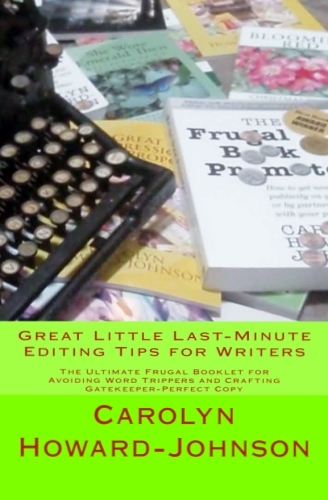
Carolyn Howard-Johnson also wrote a fun-and-fast booklet  Great Little Last-Minute Editing Tips for Writers:
The Ultimate Frugal Booklet for Avoiding Word Trippers and Crafting Gatekeeper-Perfect Copy
full of wordtrippers and some help on style choices. The newly formatted Frugal Editor is available for e-readers and will be published in paperback in July of 2014.

Wednesday, February 19, 2014

The strange appeal of the Biblio-Mat

I have more books than I can read. My shelves are stacked three books deep with books squeezed in everywhere they can fit, and new books arrive in the post almost on a daily basis. I don't need more. I turn down offers of books every day, and yet, I'm strangely attracted to the Biblio-Mat. I don't live in Toronto, CA, where the Biblio-Mat is housed - in a very cool looking bookstore called The Monkey's Paw - but if I did, or if there were one near me (there isn't even a bookstore nearby anymore), I'd be at it regularly to put $2 into the machine and take my chances on a randomised antique book, delivered like a gumball, out of the slot at the bottom. Why? It's certainly not because I need something to read - there is a gorgeous stack of great books right here awaiting my attention.  Perhaps it's because the machine itself is kind of retro, with a cover like an old Penguin novel. Maybe it's because it makes old fashioned noises like bells, whirs and clinks (and I'm feeling nostalgic for that kind of noise). You can have a look and listen yourself here: http://vimeo.com/53679084.  Or maybe it's because, as Stephen Fowler, owner of the Biblio-Mat and The Monkey's Paw puts it, there's a sense that the book that comes out the bottom is choosing you personally. That is, of course, the serendipity that makes it so appealing. It's a lucky dip for readers - a tiny bit of a gamble that won't leave you broke. What book lover could resist that?

Monday, December 2, 2013

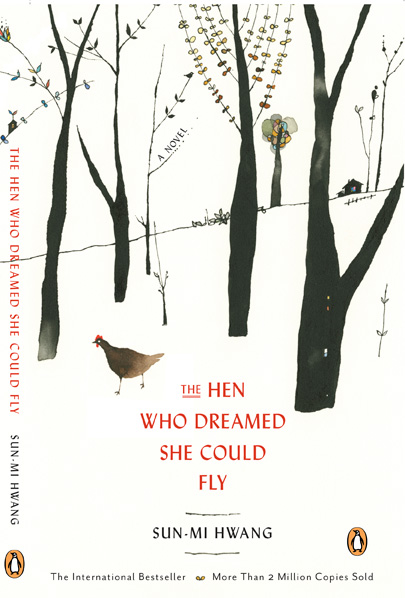
New Compulsive Reader Newsletter for Dec: Sun Mi-Hwang, Tim Winton, Beau Riffenburgh, Scott D Roberts and more

Hello readers.  A new Compulsive Reader newsletter has just gone out for December, chock full of literary news, competitions (3 book giveaways this month), new reviews, and interviews.  If you've somehow missed it, you can grab a copy from the archive.  To subscribe, just visit the front page of The Compulsive Reader site.

Tuesday, November 26, 2013

Guest Post: Who Am I by Erika Rummel

Who am I? It’s difficult to answer that question when you play multiple roles every day – housewife, mother, career woman, lover. Are you that caring kiss-you-better person, or that authority figure, or that gourmet chef, or that sex kitten?

Who am I? is the question Lisa asks in HEAD GAMES, but instead of looking inside herself for an answer, she makes the mistake of looking into the mirror of other people’s eyes. Don wants her to be his baby doll, Jim wants her to be his lover, and the spiritualist Santos wants her to be a medium to attract his missing sister.

HEAD GAMES is not only a journey into the strange and mysterious north country of Argentina. It is also a journey into Lisa’s head, the landscape of her crazy imagination and the only place where the existential question Who am I? can be resolved.


Is HEAD GAMES autobiographical? Yes, I’ve lived and traveled in Argentina. The description of the wild country on the border of Bolivia is authentic, as is the threatening political climate in the early ‘80s when Argentines lived under the iron fist of the military junta.

In some ways, Lisa is me. In others, she isn’t. Unlike her, I am suspicious of spiritualists and séances. And I wouldn’t fall for a creepy old man like Don, who wants to play sugar daddy. Lisa gets kidnapped in Argentina and lives the life of a captive in a Quechua family compound. Nothing like that happened to me. But like Lisa, I am trying to figure out Who am I? What do I want to out of life?

HEAD GAMES has a happy ending, and that’s what I love about novel writing: You can make it up. Lisa’s life is a fast-paced, thrilling story with a beginning, middle, and end. My life is full of inexplicable twists and turns going who knows where. Lisa ends up knowing who she is. I’m still searching!


PS: If you are into the question Who am I, you’ll also enjoy my novel PLAYING NAOMI, in which Liz, an out-of-work actress, impersonates Naomi Baum, a reclusive millionaire. She plays her role so well that she attracts all the passions meant for the real Naomi. Ted romances her. Miro plots her murder. Things are getting out of hand. Maybe it’s time for Liz to slip back into her old life and her old self? Or is it too late, and has she turned into Naomi?

Find more about Erika Rummel and her fiction at: http://www.erikarummel.com 

Monday, November 25, 2013

Poetry Monday: Kate Middleton following the Colorado River

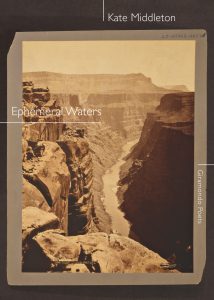
Though you may have dropped by expecting the Dutchess of Cambridge, the Kate Middleton I want to profie today is the author of the exquisite book Ephemeral Waters which was launched last week by Chris Andrews. Ephemeral Waters is one long poem, broken up into 9 parts including an Instruction (Prologue) and a Relection, After.

The work winds its way with the 1,450 mile river, moving from Colorado through Utah, Arizona, Nevada, California, and Mexico like a poetic tour guide, picking up pieces of information, detritus, visiting side roads, recreation areas and museums, and holding conversations with strangers. It's a fantastic journey that reveals more than simply one place or one space, but also carries us into the heart of humanity, of our frailties, and of the fragility of the natural world on which we rely.  Here's a tiny snippet from the "Instruction (Prologue)":

Drive    You will learn
something    You will learn
nothing but absence, but rock's
wonderful indifference

Middleton's poetry has won a number of prestigious awards (including the WA Premier's Award for Poetry). She was the inaugural Sydney City Poet until 2012.  You can grab a copy of the book here: http://www.giramondopublishing.com/poetry/ephemeral-waters/


Friday, November 15, 2013

Guest post: On Digital Books and Reader Expectations by Leigh Russell

The first Geraldine Steel murder mystery, Cut Short, came out in print in the UK in 2009. In one of the first US reviews, which appeared in the Compulsive Reader, it was described as a 'fine police procedural, with a convincing if disconcerting feel of contemporary Britain.' I remember the thrill of reading a review on an American website, never dreaming that one day my books would find a US publisher.

A fellow author suggested my publisher bring it out as a digital book. It seems strange to recall that just four years ago I wasn't really sure what that meant. Nevertheless I sent a polite request to my publisher to bring my debut out as an ebook. No one thought it was important, but six months later the digital version duly came out. 'Of course your books don't sell on kindle,' someone in the know told me. As for me, I still had only a vague notion what a kindle was. Exactly the same happened with Road Closed in 2010.

But reading habits were changing. When Dead End came out in 2011, the digital and print books were published on the same day. By the time Death Bed appeared in print in 2012, the digital book had already  been available for six months. This pattern has been repeated in 2013, with digital versions of Stop Dead and Cold Sacrifice available for download six months in advance of  print books. 

Nowadays, no one says my titles 'don't sell on kindle'. Not only have the print books reached bestseller lists in the UK bookstore chains and on amazon, but the ebooks have reached Number 1 on kindle.

Every British author aspires to be published in the US, so I was very excited when, following the series' success in the UK, all of the Geraldine Steel books were acquired by a US publisher. They are also publishing my new spin off series for Geraldine's sergeant, Ian Peterson.

Harper Collins US are publishing my books at a rate of one a month, starting with Cut Short in November 2013. It is exciting, but times have changed since Cut Short was first published. Harper Collins are publishing my titles as ebooks first. I doubt if I anyone will suggest I send my US publisher a polite request to bring my books out in print. How times have changed!

Find out more about Leigh and her work at: http://leighrussell.co.uk/