
Tuesday, December 31, 2024
CR Newsletter Jan: Moving to Substack

Saturday, November 30, 2024
Compulsive Reader Newsletter December

https://compulsivereader.com/sendpress/email/?sid=MA&eid=MjY0Mzc
If you aren't a subscriber, visit: http://www.compulsivereader.com and you can subscribe directly. Happy reading!
Image: Books in HCRO Dorm Library" by C G-K is licensed under CC BY 2.0
Thursday, October 31, 2024
Compulsive Reader Newsletter November

Monday, September 30, 2024
Compulsive Reader Newsletter - October 2024
.jpg)
Image: Abhi Sharma from India, CC BY 2.0 <https://creativecommons.org/licenses/by/2.0>, via Wikimedia Commons
Saturday, August 31, 2024
Compulsive Reader Newsletter - Sept 24

The Sept Compulsive Reader newsletter is on its way to readers around the world. This month has the usual big literary news roundup as well as new interviews from Anne Elezabeth Pluto, Ruth Oskolkoff, and our feature podcast, Sarah Temporal (you can go straight to that one here: https://podcasters.spotify.com/pod/show/compulsivereader/episodes/Sarah-Temporal-on-Tight-Bindings-e2nmqbd
We also have loads of new reviews and two terrific new giveaways.
If you can't wait for the newsletter to arrive (they go out in slow bursts), you can always: view it in your browser and if you aren't getting the newsletter please make sure to whitelist us. To sign up for the free newsletter visit: http://www.compulsivereader.com (upper right hand side). Happy reading!
"May 2014 Books" by The Marmot is licensed under CC BY 2.0.
Thursday, August 1, 2024
CR Newsletter August 2024

To check out the newsletter in the archive visit: Archive. To subscribe, visit http://www.compulsivereader.com and pop your email in the box on the upper right side. Happy reading!
Sunday, June 30, 2024
Compulsive Reader Newsletter July

The July Compulsive Reader Newsletter has just gone out. This month's issue has a bunch of new reviews including Russell Blackford's How We Became Post-Liberal, Preet Kaur Rajpal's membry, Carolina Hotchandani’s The Book Eaters to name just a few and on our podcast Julia Levitina reading from and talking about her book The Girl from Moscow. We have a new giveaway for a copy of Civilisation Française by Mary Fleming, and of course our giant roundup of June's literary news. If you can't wait or want a preview before subscribing you can check it out in the public archive here: July Compulsive Reader newsletter
To subscribe visit: http://www.compulsivereader.com
Saturday, June 1, 2024
Compulsive Reader Newsletter June

Wednesday, May 1, 2024
Compulsive Reader Newsletter May
 Another month has gone by and the May Compulsive Reader newsletter is now on its way to inboxes everywhere. I've been trying to get on top of my backlog of reviews so keep adding more and more to what used to be 10 a month. This month we actually have 16 new reviews and 2 interviews, including Turn Up the Heat's Ruth Danson along with our Compulsive Reader Talks segment with the wonderful Kent MacCarter who reads from and talks about his book Fat Chance, also reviewed. We have 2 new book giveaways including Night of the Hawk by Lauren Martin and The Alone Time by Elle Marr, and of course a huge round up of awards and other literary news from around the world. If you haven't gotten yours yet, or just want to check it out before you subscribe (for free of course), you can pick up a copy in our permanent archive:
 To subscribe, just visit http://www.compulsivereader.com and put your email address in the subscribe box on the upper right hand side and join the fun. Happy reading!
Sunday, March 31, 2024
Compulsive Reader Newsletter April

To sign up visit http://www.compulsivereader.com
You can check out this month's issue in the archive here: https://compulsivereader.com/sendpress/email/?sid=MA&eid=MjU2ODM
Thursday, February 29, 2024
Compulsive Reader Newsletter March
 The March Compulsive Reader Newsletter is now on its way to inboxes around the world. This month features a new interview with Kin's Marina Kamenev along with a bunch of reviews of books such as Notorious in Nashville by Phyllis Gobbell, Stephen Davenport's Ninety-Day Wonder, Rambles by Beatriz Copello, An Unshared Secret and Other Stories by Ketaki Datta, and Ask Me About the Future by Rebecca Jessen to name just a few. We also have two new competitions, a big February news round-up, and loads more. If you can't wait for it to arrive (please whitelist my email address so I don't end up in your spam!), you can view it in your browser. To sign up for free just visit http://www.compulsivereader.com
Thursday, February 1, 2024
Compulsive Reader Newsletter - February
If you haven't received yours or want to check it out you can grab a copy from the archive here
To subscribe for free, visit: http://www.compulsivereader.com
Sunday, December 31, 2023
Compulsive Reader Newsletter January

If you can't wait or somehow aren't getting it you can grab a copy in the archive here.
To sign up visit http://www.compulsivereader.com
Thursday, November 30, 2023
Compulsive Reader Newsletter Dec
 The December Compulsive Reader Newsletter has just gone out. As always the issue is chock-full of new book reviews and interviews including The Lady in The Bottle by Rozanna Lilley, Aboard the Time Line by Bastian Gregory, The Unreal City by Mike Lala, See What I Mean by Charles Rammelkamp, A Brilliant Life by Rachelle Unreich, and lots more as well as 2 new book giveaways, interviews and much more. To read it online visit: Compulsive Reader Newsletter archive. To sign up visit: http://www.compulsivereader.com
Happy reading!
Friday, November 10, 2023
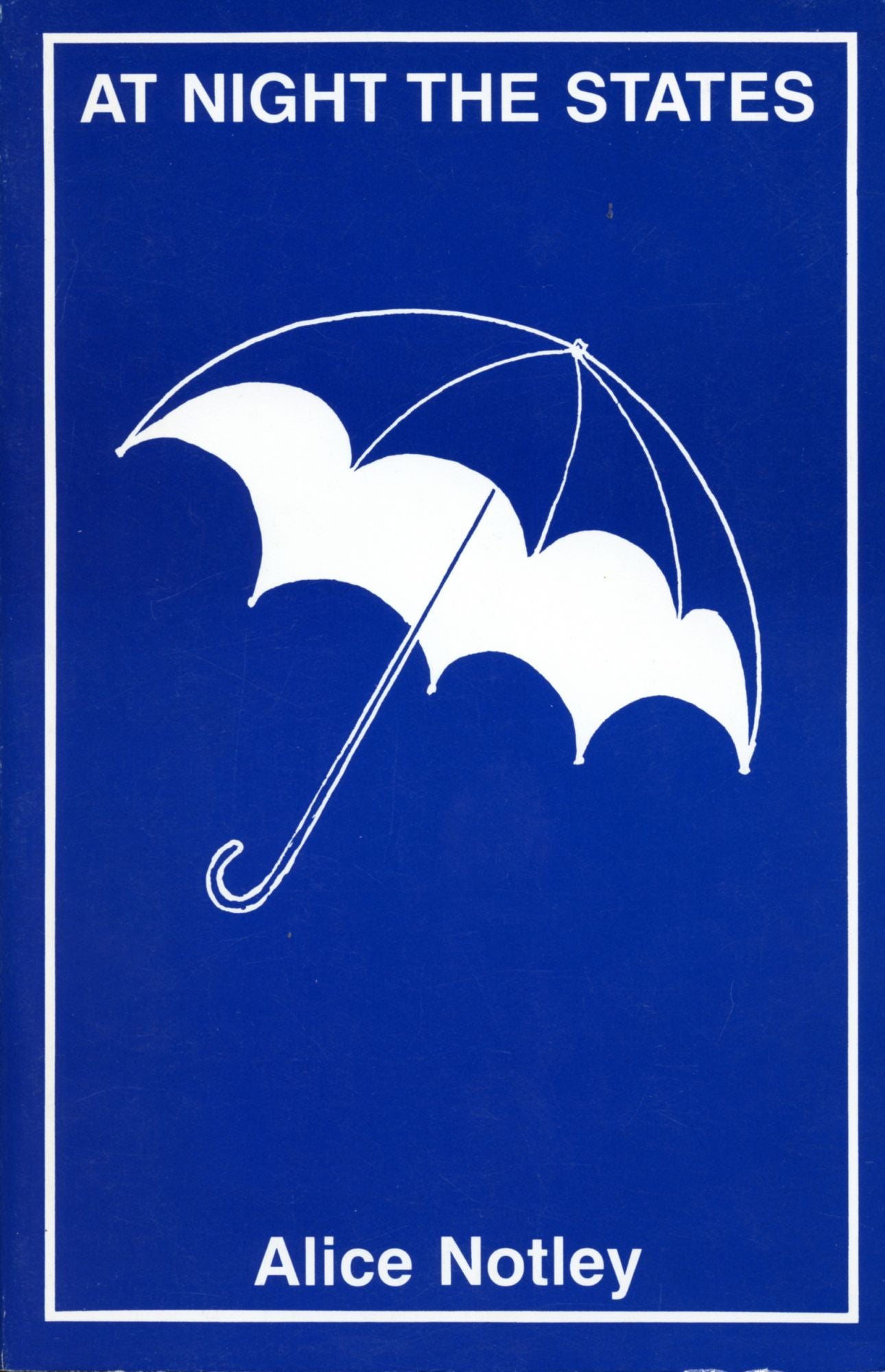
New York Surrealism: On Alice Notley's How to Really Get an Apartment
**********
Alice Notley’s “How to Really Get an Apartment” is, in many ways a classic New York School poem. It has all the hallmarks. The setting of course which is probably the most defining feature given the name - the apartment with its buzzer, the landlord, even the sense of the importance of having secured a rental property - its preciousness in the city. There are the cultural references - the name dropping of Jack Kerouac and the republican salt - one assumes that the line in quotation marks is a slogan in use at the time, and the sequencing from passing by an apartment to securing it - all happening in the present tense and progressing in a seemingly orderly way from one step to the next with multiple uses of the ampersand to indicate the next step forward in a way designed to be intentionally conversational and visual. There is also the abbreviation of apartment to apt and the four em dashes that create a visual sense of motion in the work.
The conversational quality here is one that mirrors the breathlessness and easy quality of a discussion you might have with someone over a drink - the intimacy that begins with starting the work with ellipses and a reference “the same building”, as if we had already been talking about the building, and takes on the cadence of a narrative that melds present tense with reminiscence and digression, as if this were an anecdote told to the reader as addressee. This is partly indicated by the title which is a kind of recipe or even a hook - read this and you’ll find out something you need to know, which is humorous because it’s not a standard logic and shaking salt at a landlord and calling it wine will not get you a coveted apartment in New York City. Besides, it negates itself at the end in the classic New York School way of calling into question the overall tenet of the poem.
The surrealism here is one that Notley is famous for - her use of dream sequencing. In this instance that dream logic is in play where each image gives rise to the next one - and the relationship does not have to be the kind we are used to in daily life or “plain time”. Instead we have building to Kerouac to buzzer to salt to wine to access. It’s a progression that works perfectly from a grammatical and linear point of view but has a subverted semantics where salt and wine can be synonymous, and where the desire to really obtain an apartment is a desire for what is already there. The symbolism here is one that has a sonic quality - using free association of sound, including subtle alliteration and repetitions such as “girl” with the repetitions of “get”, the multiple instances of salt, the alliteration of “w” as the poem progresses through the latter part of the poem - “whenever”, “walks”, “Would”, “wine” and the multiple variations on “you” and “your”. All of these sounds combine to create a gentle motion forward that mimic the progression of walking, forming a small but perfectly formed New York poem.
Thursday, November 2, 2023
Compulsive reader Newsletter November

"Books" by shutterhacks is licensed under CC BY 2.0.
Thursday, October 19, 2023
Darkinfested: sensate and visceral (on "Subliminal" by Lorine Niedecker)
This is my second ModPo 2023 essay on Lorine Niedecker's "Subliminal". I've been on quite the Niedecker kick lately and coming across this sequence, which I hadn't read before, has increased the kick. The bit below is all I wrote the message on but I recommend the full sequence which cannot be found online (I won't paste from my book which I don't think is legal), but the book with the full sequence is Harpsichord & Salt Fish which I now have but which you could very likely get from your local library if you want to read it in full (highly recommended). The essay specifically asked us to explore how this poem engages with the principles of Imagism.
“Subliminal” by Lorine Niedecker is a five-poem sequence, but for the purpose of this essay I will only be close-reading the first section. In classic Niedecker style, the poem is condensed and spare, its meaning arising as much from the structure and spaces in the work as from the semantics. The short lines of each of the four couplets begin with two or three words indented as the first part of the couplet, describing what is mostly sensate and visceral - embodied in alliterative and sometimes sibilant sounds that evoke an immediate response in the reader. The second lines of the poem are more descriptive and slightly longer - an attempt perhaps at qualifying the sensation of the first line. For example, a reader might approach the first couplet with the question “what is Sleep’s dream” and the answer ‘a nerve-flash in the blood”. The poems structure with those even indents create a visual impression of a double helix twist - perhaps hinting that there is something inherited here - that tall, torment of the mother, the repeated use of the word “nerve”.

Saturday, September 30, 2023
ModPo 23: another Loneliness

There is another Loneliness— That many die without Not want or friend occasions it Or circumstances or Lot
But nature sometimes, sometimes thought And who so it befall Is richer than could be divulged By mortal numeral—
My essay, titled "Loneliness as Superpower" follows:
Emily Dickinson’s“There is another Loneliness” begins, as many Dickinson poems do, as if she were responding to being called lonely or to a conversation where the word “loneliness” had been used in some conventional way, that is, a lack of social interaction (“want or friend” or maybe ‘want of friend’). The use of the word “another” seems to reference that implied context. The Loneliness (with an upper case L) that Dickinson is talking about here is not negative, but rather, a lifesaver (“many die without”). It is something powerful, and rich, and not impacted by “circumstances or Lot” but rather, is innate, as “nature” which she seems to be using here as something inherent - as opposed to nurture rather than the external environment. As so many of Dickinson’s poems are meta poetic, it’s not a stretch to think that she could be talking here of the poetic muse or a singular interiority that has the look of loneliness but is actually a superpower (“Loneliness”), rich and in a way immortal (“richer than could be divulged/By mortal numeral). The structure of the work is the classic two stanza, quatrain form though the two dashes - one in the first line and one at the very end form set of prongs are visually striking while also making creating a very subtle circularity as those dashes, both open, seem to connect the thoughts between the first line with its alternate Loneliness and the end with its mortal numeral as if in some way those two lines were in opposition to one another. One might stretch the concept of a mortal numeral to a kind of spreadsheet or accounting where life is measured by productivity rather than introspection and creativity. These opposing forces continue to shine a positive light on the other Loneliness. Rhythmically, this poem uses the standard iambic pentameter with an ABAB rhyme scheme, though naturally the rhymes are slanted so Loneliness and it are the matches along with without and Lot, thought and divulged, and befall and numeral. At first glance these words don’t seem to rhyme at all, but when reading the poem aloud, the regular meter and the placement of the words does create a rhyme pattern that seems even to the ear. There is very little alliteration in this poem, but there are interesting repetitions, such as the double ‘sometimes’ in the second stanza, and the way that Loneliness and Lot are both capitalised. In the first stanzas the words “There” and “That” in the first stanza and “But” and “By” in the second provide extra emphasis and help keep the sonics regular and contained -as a sort of constraint of form. This creates a lovely structural tension that conveys the power of a deep solitude that might look like loneliness, but is actually the creative imagination.
Compulsive Reader Newsletter October

Happy reading!
"Wall of Books" by benuski is licensed under CC BY-SA 2.0.
Thursday, August 31, 2023
Compulsive Reader Newsletter Sept is out

Photo by Quimby https://flic.kr/p/aWHD1M (CC BY-NC-SA 2.0)
(CC BY-NC-SA 2.0)
Subscribe to:
Posts (Atom)