Showing posts with label @modpopenn. Show all posts

Friday, November 10, 2023

New York Surrealism: On Alice Notley's How to Really Get an Apartment

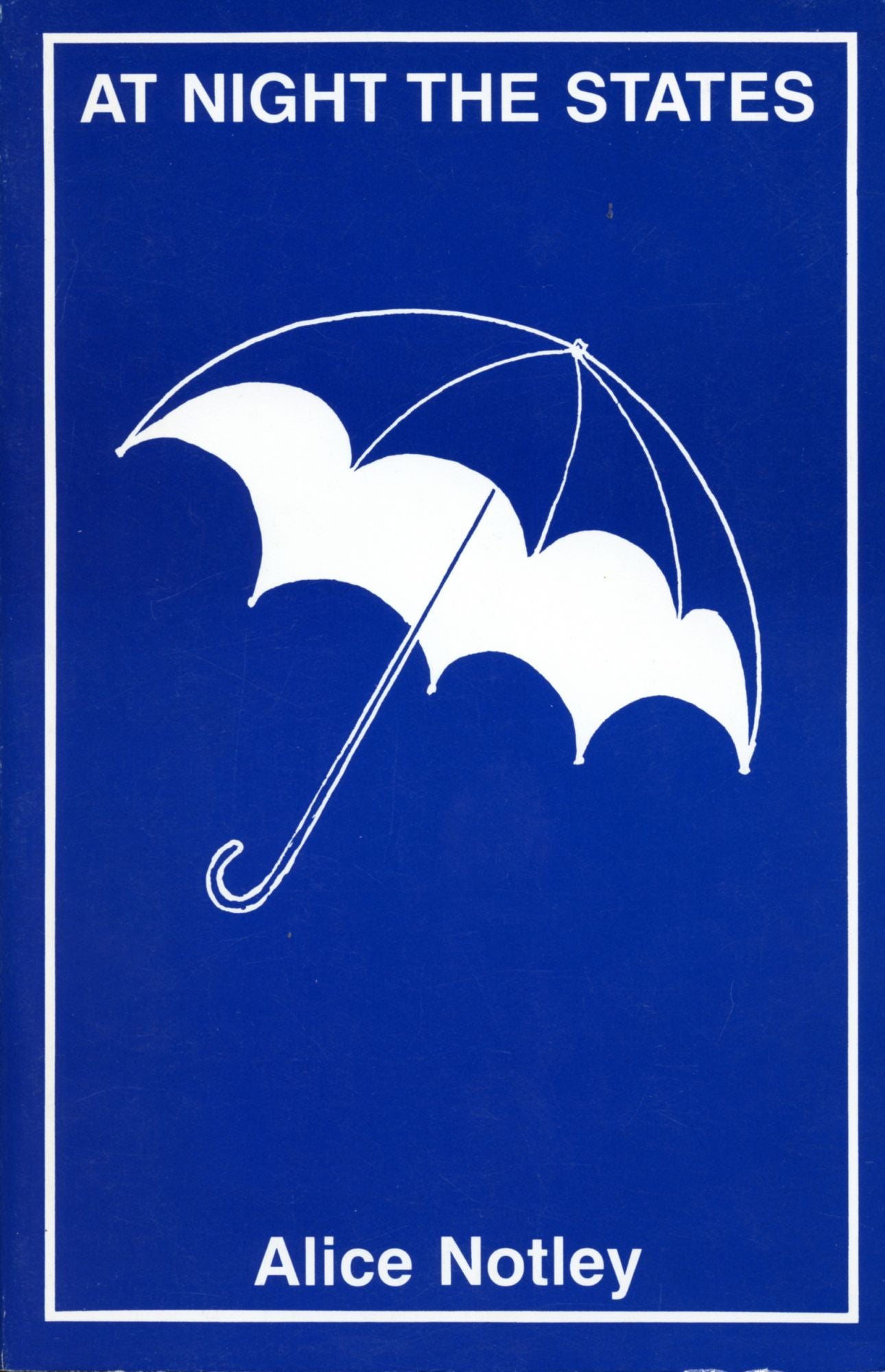
Here is my third ModPo essay this year. Unfortunately I cannot find the source poem online to link to and I don't want to reproduce here in case of copyright issues so I'll just say that the source poem is from the book At Night the States, published 1987 by Yellow Press, Chicago and is well worth checking out if you can. The book is available on Scribd https://www.scribd.com/document/652772575/alice-notley-at-night-the-states-1 so if you have a subscription as I do, you can view it on page 49 at the link above.  And just for fun, you can read the much longer title poem of the book here if you're wanting more Alice or can't get to the book on Scribd: https://www.poetryfoundation.org/poems/50834/at-night-the-states

**********

Alice Notley’s “How to Really Get an Apartment” is, in many ways a classic New York School poem. It has all the hallmarks. The setting of course which is probably the most defining feature given the name - the apartment with its buzzer, the landlord, even the sense of the importance of having secured a rental property - its preciousness in the city.  There are the cultural references - the name dropping of Jack Kerouac and the republican salt - one assumes that the line in quotation marks is a slogan in use at the time, and the sequencing from passing by an apartment to securing it - all happening in the present tense and progressing in a seemingly orderly way from one step to the next with multiple uses of the ampersand to indicate the next step forward in a way designed to be intentionally conversational and visual.  There is also the abbreviation of apartment to apt and the four em dashes that create a visual sense of motion in the work. 


The conversational quality here is one that mirrors the breathlessness and easy quality of a discussion you might have with someone over a drink - the intimacy that begins with starting the work with ellipses and a reference “the same building”, as if we had already been talking about the building, and takes on the cadence of a narrative that melds present tense with reminiscence and digression, as if this were an anecdote told to the reader as addressee. This is partly indicated by the title which is a kind of recipe or even a hook - read this and you’ll find out something you need to know, which is humorous because it’s not a standard logic and shaking salt at a landlord and calling it wine will not get you a coveted apartment in New York City.  Besides, it negates itself at the end in the classic New York School way of calling into question the overall tenet of the poem.  


The surrealism here is one that Notley is famous for - her use of dream sequencing.  In this instance that dream logic is in play where each image gives rise to the next one - and the relationship does not have to be the kind we are used to in daily life or “plain time”.  Instead we have building to Kerouac to buzzer to salt to wine to access.  It’s a progression that works perfectly from a grammatical and linear point of view but has a subverted semantics where salt and wine can be synonymous, and where the desire to really obtain an apartment is a desire for what is already there.  The symbolism here is one that has a sonic quality - using free association of sound, including subtle alliteration and repetitions such as “girl” with the repetitions of “get”, the multiple instances of salt, the alliteration of “w” as the poem progresses through the latter part of the poem - “whenever”, “walks”, “Would”, “wine” and the multiple variations on “you” and “your”.  All of these sounds combine to create a gentle motion forward that mimic the progression of walking, forming a small but perfectly formed New York poem. 

Thursday, October 19, 2023

Darkinfested: sensate and visceral (on "Subliminal" by Lorine Niedecker)

This is my second ModPo 2023 essay on Lorine Niedecker's "Subliminal". I've been on quite the Niedecker kick lately and coming across this sequence, which I hadn't read before, has increased the kick.  The bit below is all I wrote the message on but I recommend the full sequence which cannot be found online (I won't paste from my book which I don't think is legal), but the book with the full sequence is Harpsichord & Salt Fish which I now have but which you could very likely get from your local library if you want to read it in full (highly recommended).  The essay specifically asked us to explore how this poem engages with the principles of Imagism. 

“Subliminal” by Lorine Niedecker is a five-poem sequence, but for the purpose of this essay I will only be close-reading the first section.  In classic Niedecker style, the poem is condensed and spare, its meaning arising as much from the structure and spaces in the work as from the semantics.  The short lines of each of the four couplets begin with two or three words indented as the first part of the couplet, describing what is mostly sensate and visceral - embodied in alliterative and sometimes sibilant sounds that evoke an immediate response in the reader. The second lines of the poem are more descriptive and slightly longer - an attempt perhaps at qualifying the sensation of the first line. For example, a reader might approach the first couplet with the question “what is Sleep’s dream” and the answer ‘a nerve-flash in the blood”.  The poems structure with those even indents create a visual impression of a double helix twist - perhaps hinting that there is something inherited here - that tall, torment of the mother, the repeated use of the word “nerve”.  

There are many elements of this extract that align with imagism.  All of the sonic and structural elements of the poem described above do seem to suggest something other than a "direct treatment of “thing,” one of Imagism’s key tenants, however it is also fair to say that the poem may well be the direct treatment of a dream, rendering the elements of the dream (rather than the mother, or the sensations themselves) in a direct way.  It is also possible to define the object as the mother, the most concrete image in the poem, rendered with a crispness as ‘tall, tormented’ both fairly straightforward words and an absence of metaphors, as is often the case with Niedecker.  I do think that would be a simplistic reading of the poem though, as there is much that could be taken as symbolic. While the poem feels internally complete and not referential and the words are, in the main, not decorative, there is that final word, ‘darkinfested’ - which comes right at the end of the extract as a portmanteau (two words combined) which wouldn’t appear in common speech that way.  Linking the deep interiority of a dream with all that sensation, and then using that final, powerful portmanteau to end the extract, gives the poem a symbolic and even surrealistic quality which hints in a very non Imagistic way, at the unconscious, and the traumas we might carry, and less about the dream itself, or even the mother who appears here as an ominous presence.  There’s a certain dynamism here that is brought in with the combination of these sensual images - the nerve-flash and cold sensation and the structure of the helix which suggests inheritance, along with the seductive, sibilant musicality of the sound.  While it is true that Imagism seeks new rhythms, there is, in this condensation, much in the way of symbolic and intense power not in keeping with the fixed object of an Imagistic approach but rather much more open, and subject to multiple interpretations, readings and ways of experiencing.  


Saturday, September 30, 2023

ModPo 23: another Loneliness

It has been a little while since I've posted a gushing recommendation for the fabulous Modern and Contemporary American Poetry annual course (more like a symposium cause we keep coming back) affectionately known as ModPo and I've been dipping in for a few years but this year I'm doing the whole thing - main course, all poems, all essays - full in.  It's about my tenth time (I've been doing this course since it started 12 years ago) but a) I'm still finding new things - or as I said in the discussion forum when I phoned in, I've changed, the world has changed, and I bring my new perspective to the same poems and b) there is a lot of new material - some brought into the main course and some crowd sourced in the community section.  It's as wonderful as ever and if you haven't signed up you can still just jump right into the river and you don't have to do anything at all, or you can read one poem, or you can do full immersion or any variation of that.  But know that whatever you decide you will be welcomed and encouraged and will gain something from it - from the reading, for your writing practice, and for your sense of poetry and art and life.  In the past I've posted up my 4 essays as a way of keeping track and maybe helping others who might be interested in these pieces and I'm going to do that this year, starting with the first essay (just finished the second but I'll leave it a few weeks till I post here and might edit a bit based on feedback first) which is just 500 words on a poem by Emily Dickinson:

There is another Loneliness— That many die without Not want or friend occasions it Or circumstances or Lot


But nature sometimes, sometimes thought And who so it befall Is richer than could be divulged By mortal numeral—


My essay, titled "Loneliness as Superpower" follows:


Emily Dickinson’s“There is another Loneliness” begins, as many Dickinson poems do, as if she were responding to being called lonely or to a conversation where the word “loneliness” had been used in some conventional way, that is, a lack of social interaction (“want or friend” or maybe ‘want of friend’). The use of the word “another” seems to reference that implied context. The Loneliness (with an upper case L) that Dickinson is talking about here is not negative, but rather, a lifesaver (“many die without”). It is something powerful, and rich, and not impacted by “circumstances or Lot” but rather, is innate, as “nature” which she seems to be using here as something inherent - as opposed to nurture rather than the external environment. As so many of Dickinson’s poems are meta poetic, it’s not a stretch to think that she could be talking here of the poetic muse or a singular interiority that has the look of loneliness but is actually a superpower (“Loneliness”), rich and in a way immortal (“richer than could be divulged/By mortal numeral). The structure of the work is the classic two stanza, quatrain form though the two dashes - one in the first line and one at the very end form set of prongs are visually striking while also making creating a very subtle circularity as those dashes, both open, seem to connect the thoughts between the first line with its alternate Loneliness and the end with its mortal numeral as if in some way those two lines were in opposition to one another. One might stretch the concept of a mortal numeral to a kind of spreadsheet or accounting where life is measured by productivity rather than introspection and creativity. These opposing forces continue to shine a positive light on the other Loneliness. Rhythmically, this poem uses the standard iambic pentameter with an ABAB rhyme scheme, though naturally the rhymes are slanted so Loneliness and it are the matches along with without and Lot, thought and divulged, and befall and numeral. At first glance these words don’t seem to rhyme at all, but when reading the poem aloud, the regular meter and the placement of the words does create a rhyme pattern that seems even to the ear. There is very little alliteration in this poem, but there are interesting repetitions, such as the double ‘sometimes’ in the second stanza, and the way that Loneliness and Lot are both capitalised. In the first stanzas the words “There” and “That” in the first stanza and “But” and “By” in the second provide extra emphasis and help keep the sonics regular and contained -as a sort of constraint of form. This creates a lovely structural tension that conveys the power of a deep solitude that might look like loneliness, but is actually the creative imagination.

Thursday, September 24, 2020

ModPo 2020 Analysis: The Poets Light But Lamps by Emily Dickinson


It's ModPo time again!  I've participated in the, by now famous, Modern and Contemporary Poetry (“ModPo”) course since it began in 2012.  Every year is different, informed by the many changes in our lives, in the world, and in the overall material that comprises the course, which are ever expanding. One of the many things I like is how the essay subjects continue to change, so that there are new poems to dive into. This year, the Emily Dickinson poem is number 930, "The Poets light but Lamps".  My essay follows.  If you haven't joined ModPo, I heartily recommend it.  It's free, there are no constraints (you can do as much or as little as you want - now, or throughout the year), it's open to all levels, and it's very engaging!  

The Poets light but Lamps--
Themselves — go out —
The Wicks they stimulate
If vital Light

Inhere as do the Suns —
Each Age a Lens
Disseminating their
Circumference —

“The Poets light but Lamps” is one of Dickinson’s shorter poems - with just two quatrains of no more than 5 words per line with a very regular syllabic structure of 6/4/6/4 for each of the quatrains. There is no punctuation other than the em(ily) dash which adds space without slowing the reading down, thereby energising the piece, as it draws the eye forward. The poem ends with the dash, which, except in the work of Dickinson, is rarely used for the ending of something, and hints at the ongoing nature of the work - visually indicating that this is not an ending as such, but something that will continue - poetry being immortal. 

The dash also provides a visual representation of a wick, thereby picking up the “Wick” in the third line, stimulated by the Poet’s light - or the light of poetry. Unusually for Dickinson, the first word of each line is capitalised. Assuming this was Dickinson's intention rather than the work of an overzealous editor, this creates a regularity that is also strengthened by capitalisation's emphasis as it creates a mirroring of "The Poets" with "The Wicks". There is also an alliteration between "If" and "Inhere", thereby linking lamplight with sunlight. The poem utilises an extended metaphor conflating the work of the poet (a lamplighter stimulating a wick - perhaps the impetus for the poem) with the Sun itself - or Suns (?) - some broader category of star shine than simply our own Sol. 

Three words stand out for the number of syllables they contain and seem to connect to one another: stimulate, Disseminating, and Circumference. Though there are all quite different words, without too much in common other than the scientific quality and the multisyllabic sound, but they also provide a sense of sonic expensiveness, as if the very nature of these longer words were able to extend the reach of the poet - moving outwards from the point of stimulation in an expansionary way, spreading outside of the circle of life. You could almost visualise the light (of poetry) spreading in that way through through the work and outwards from it. 

“Inhere” is an unusual word which means “to exist essentially or permanently in”, as in inherent. It’s possible to read the first line of the second stanza as relating to the vital light of poetry as being part and parcel of what we need to survive - as life-giving and in need of dissemination by each age. The one word which doesn’t quite fit semantically is “If” which is a point of uncertainty in the overall piece adding in a condition that could undermine the work’s thesis. If the light is not vital then perhaps there is no immortality - perhaps only some poetry is vital and work that is not vital can be forgotten. Or, it may be that the condition is one that sits with the reader. ‘If’ the reader judges the work as vital, then there is a mandate to disseminate the poetry for the sake of humanity, vital poetry being as necessary to life as sunlight, against the ephemeral darkness of each age’s fashion.

Sunday, October 13, 2019

Poem (As the cat)

We’re just beginning week 6 (the beats!) of the wonderful annual 10 week session on modern experimental US poetry (ModPo).  William Carlos Williams (affectionately known as WCW) is actually covered in  week 3 and though I feel like I have an intimate knowledge of WCW’s work, once again, ModPo has given me a poem to work with that I’ve not read before: “Poem (As the cat)”.  We wrote our second essays in week 4, and critiqued others (a pleasurable activity that always yields new insights) through week 5. The full text of the poem follows:

As the cat
climbed over
the top of


the jamcloset
first the right
forefoot


carefully
then the hind
stepped down


into the pit of
the empty
flowerpot


Here’s my essay :-)

William Carlos Williams’ (WCW) “As the cat” takes the form of a single sentence. The poem follows the progression of a cat as it climbs over a cupboard into an empty flowerpot. The poem uses simple prosaic language, and creates a clear visual. The poem is spare in form, and free of extraneous words, however, this is not a static poem, and there are subtle, but deliberate choices that open the poem to interpretations that belie its apparent simplicity.


“As the cat” is structured to flow in soft, cat-like steps of 3 and 4 syllable lines. This is a cat on the move. The poem opens with the word “As”, which appears to be a conjunction, implying that something additional is happening concurrently with the cat’s descent, though there is nothing provided for comparison. “Then” is the natural companion to “As”, providing the poem’s turn in the moment when the cat changes direction from up to down, almost in a breathlike motion: the stepping up being an inward breath and the stepping down being exhalation.


Many of WCW’s word choices are unusual. This is not any cat but “the cat”. This implies intimacy with the reader. We are meant to know that this is a particular cat, most likely one that belongs to the speaker. It could be a metaphorical or real cat, but it is a cat with agency. It takes the deliberate action of climbing, which involve effort, then it steps down, another act of effort. No human involvement is happening here, other than in the observation, which creates an observer effect, fixing the cat in its motion or arc: deliberately moving over and then down. The jamcloset hints at a similar type of industry, that of jam-making (plum jam perhaps?), though we have no indication whether the closet is full or empty, though we know it must have contained jam because otherwise it would not be called a jamcloset – an unusual word that in assuming the reader will understand, also creates intimacy.


The word “pit” is also unusual here. Flowerpots are normally not excessively deep, and to call their interior a “pit”, particularly in conjunction with “empty” implies a kind of meaninglessness. This is more than just a visual image, but rather it’s an image of desolation that hints at death. There is a sense in the construction of this poem that by fixing the cat in this Sisyphean activity of climbing over the jamcloset and into the flowerpot, we are in fact keeping the cat in this state of agency, and thereby somehow cheating death. Of course the poem leaves this kind of extended interpretation solely to the reader. It merely provides a series of steps, rhythms, particular word choices, and the image itself, but by focusing such intense concentration on a single, ordinary, moment in time, the nature of that concentration creates this transcendence. This seems to me to be the very essence of the Imagist ideal.


Sunday, November 13, 2016

Poetry Monday: Squeezing language like honey - on Eileen Myles’ "The Honey Bear"

I’ve got Eileen Myles’ I Must be Living Twice by my bedside, and every night before I go to bed, I read a poem from it. This very slow reading allows me to take a bit more time than I usually would over each poem, really delving into them and sometimes giving me interesting dreams.  Someone asked me the other day if I was a speed reader or found myself reading faster the older (and presumably more experienced at reading) I got.  My answer was that I am a slow reader and am getting ever slower.  Slow is good, I think.  It’s not so much speed, but the amount of attention I give to what I read.  I want to really experience the things I read - not merely scan or skim over the surface.  That will often take time, and one reading is often not enough for me, especially with poetry.  I have to mull and then return.  I was particularly happy about the opportunity to go even deeper into one of the poems in Myles’ latest collection, which, by serendipity was on the list of essay topics for the ModPo course I’m doing.  The poem is called “The Honey Bear” and you can read the full text of it here: https://media.sas.upenn.edu/afilreis/ModPo/Writing-Assignments-PDFs/Myles_The-Honey-Bear.pdf

Following is my 500 or so (bit more...) essay.  If you have opinions about the poem, please feel free to comment.  I’d love to open a dialogue on this one.

Eileen Myles’ “The Honey Bear” presents what appears to be a straightforward narrative.  A twenty nine year old woman is standing in the kitchen on the eve of her thirtieth birthday, smoking her last cigarette before quitting, making a cup of herbal tea, and sweetening it with honey from a plastic bear dispenser.  On the radio, first we hear Ivy Anderson and then Billie Holiday – both torchy jazz singers.  The scene is suffused with a sense of time passing, both in terms of growing older and with the progression of the clock as the evening moves towards the next day.  The use of the continual present tense, and the prosaic and domestic activity depicted calls to mind the New York School of poetry.  It’s clear by the bathtub being in the kitchen that this is an older style New York City apartment, and the darkness of the music, the tea and the surroundings is offset by the brightness of the artificial lights.  
 It’s impossible to read a poem that follows this sort of progression and urban sensibility while referencing Billie Holiday, without thinking of Frank O’Hara’s “The Day Lady Died”.  O’Hara’s seminal New York School poem becomes a touchstone for this one, evoking the slow sensual pleasure of immediate sensation, from the combination of the music, the scented tea, the honey, and the tactile grooves of the bear’s face.  We know that tomorrow is the speaker’s birthday, that the speaker is alone and using the sensual aspects of the scene to offset the melancholy.  These elements, and even in the little pun in the repetition of the letter O all provide a homage to O’Hara.
 The poem, however, is suffused with rhythm and repetitions that are more stylized, musical and less prosaic than you’d usually find in The New York School. The repeated use of the present participle of verbs like hanging, smoking, singing, squeezing, standing, dripping, starting combines with the assonance of the O sound in Holiday, radio, smoking, odd, suppose, older, and the O in “O it’s very quiet”, “O very sad and sweet”, and “O honey”. Though the poem is only one stanza, about mid-way through it turns at “I’m not a bad looking woman”, interrupting the voices of the jazz singers and changing the form.  Though the scene doesn’t change, there is a progression from the clipped line breaks in the first half of the poem, to the looser structure of the second.  The O sound creates a sense of longing that progresses to sexual desire, intensified by the noodle of honey dripping down the bear’s face.  From this point onward, the poem begins to flow, opening out with mid-sentence spaces that creates a more dramatic, breathless energy: “I suppose     O it’s very quiet” or “in my kitchen tonight      I’m squeezing”.  Other words also repeat: older, sweet, odd, honey, late, kitchen, as the words drop down the page like the honey into the tea.  This dissolution breaks the narrative quality of the first half, becoming more surreal as it zeros in on the nexus of desire, the room’s silence, and the intensity of the moment in which all of these separate senses come together to the final climax of “I’m staring at the honey bear’s face.”  

Sunday, October 23, 2016

Poetry Monday: Joseph Massey and “Polar Low"

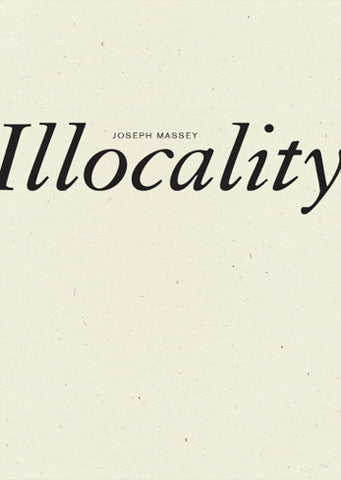
As I’m sure anyone who reads this blog knows, I’m in the midst of a 10 week (annual!) poetry course being held at the UPenn on Modern and Contemporary American Poetry.  One of the many things I like about the course is how different it is each year.  This year is particularly fresh, with a lot of material I haven’t come across before, including, to my delight, the work of Joseph Massey, whose book Illocality is on its way to me now from the US.  The poem that really got to me was "Polar Low”, and rather than try to summarise it, I’ve put the text of my essay on this poem below, not only because it covers what I want to say about the sparse complexity of this poem, but also because it provides an example of a close reading of a poem - the sort of thing I tend to do when reviewing a book (and why I’m continually drawn to reviewing, and the way it forces me to take time).

I've found a full text version of of this lovely poem here: http://robmclennan.blogspot.com.au/2015/10/joseph-massey-illocality.html.  More on Joe Massey can be found at his website.


The nothing that is: approaching nirvana in Joseph Massey’s "Polar Low”

There’s a precision in Joseph Massey’s “Polar Low,” that owes much to the Imagist tradition.  For one thing, Massey’s “direct treatment” of the trailer is described with stark clarity. The poem could be a painting, with its single image of a “yellow double-wide trailer”.  There is “nothing else”, aside from setting: the winter sun, the snow, and the sparse vegetation. The singularity of this observation and the absence of an ‘observing self’ is pure Imagism. The contrast of the colours between the yellow trailer and the white snow becomes luxurious in such a desolate scene, calling to mind William Carlos Williams’ “The Red Wheelbarrow”.  However, there is much in this work that takes it outside of the Imagist tradition.

The colours themselves are more than what they seem. The yellow of the trailer mirrors the yellow of the winter sun, which has been anthropomorphised into amnesia, while the morning becomes inarticulate.  Suddenly the reader becomes conscious of a human presence, whose suffering (coldness/poverty), and inarticulate amnesia is suffused into the scene by reversal of the pathetic fallacy, as if the human were transforming into the sun and morning rather than the other way around.  The white of the ice sheathing the trailer mirrors, both literally in terms of the light being reflected, and metaphorically in terms of matching, the white of the snow and the implied white of emptiness (the dimming scene as the piece progresses), and perhaps the white of an unwritten page. These “variations” also contrast with the green/brown of the winter thicket, a dying remnant of spring.

Rhythm is created by repetition of sound and structure, with short couplets that don’t necessarily couple up.  The first stanza has two hyphenated constructions, which are semantically opposite—half-sheathed versus double-wide—as well as being metrically and syllabically reversed.  The word “mirrors” also becomes a connector linking the trailer with the much more abstract morning – disparate images equated.  Massey uses punctuation between stanzas to slow the reading down and force a pause for reflection at each full stop.  We stop after morning as almost a shudder in our movement across the scene, and then again after sun, so that the two phrases, “The inarticulate morning” and “The amnesiac sun” are paralleled rhythmically and semantically, creating a breathlike quality to the reading.

The next sentence begins with the conjunction “And”, the point at which the poem begins to move, the trailer receding. The repetition of sound becomes stronger here, taking on a more regular rhythm that doesn’t pause until we reach (the) “perimeter”, creating a meditative effect.  This is further heightened by the soft rhymes of thin, dim, perim-eter.  Alliteration throughout the poem also adds to the deepening of breath, with the m sound in “mirrors", “morning", “amnesiac"; the s sound in “else", “contrast", “these"; the k sound in “thicket" and “choked"; the o sound in “other" and “over"; and the n sound in “noun” and “frozen".  These sonic connections give the poem a deep unity that not only creates motion in the stillness of the scene, but also draws the reader into the inarticulateness - a meaning beyond semantics, as if all we could see is white and all we can hear is our own heartbeat. At this point, the entire poem transforms the present moment itself, rather than the trailer, into its subject, and the dissolving of those names (or “nouns”) into a kind of mindful emptiness or the realisation of non-self, and both the reader and writer’s union with the scene, as the denouement.  

Monday, April 11, 2016

Poetry Monday: ModPo 2016 Registrations are Open

In case you’re one of the few people who haven’t heard me gushing about The University of Pennsylvania’s Coursera based Modern and Contemporary Poetry (“ModPo”) course, let me start by saying that this is the best literature course I’ve ever taken (and believe me, I’ve taken a lot of literature courses including a couple of degrees).  I’ve ‘done’ ModPo like 5 times, and every time has been different and intensely stimulating to me as reader and writer.  I’m excited about doing it again this year.  For those new to the course or to the study of contemporary poetry, you won’t be out of your depth.  The course caters to all levels and those whose struggle with the English language, who have not done much study, who have learning disabilities, or any other reason that might otherwise prevent you from enrolling in a formal course, are all welcomed and encouraged heartily - there are plenty of people and resources to help.  For those who have post-graduate degrees, you won’t be bored or find the course too easy.  There are many academics and teachers participating in ModPo, some of the most erudite and smart thinkers you’ll ever come across, including some of the poets we study (the likes of Christian Bök, Tracie Morris and Charles Bernstein to name a few).  You can participate at whatever level suits you and there are a wide number of spin-off groups to join if you’re so inclined  If you’re busy, you don’t need to read everything, or even do the essays and quizzes. You can just dip in, dabble, and play.  You can also go full hog, read everything and do ModPo Plus, which is like an extra area for those who want new poems, new challenges, and more complex questions and even make your own community videos for upload.  It’s all open, all free, and if you want it to be, totally immersive.

ModPo opened up my perception of what a poem can do (and I thought my perception was already pretty open), and taught me to read “difficult" modern poetry in ways I never thought possible.  I actually became a Steinian.  I found myself really enjoying experimental forms of poetry that I would have rejected before.  I became a better critic, and, I like to think, a better poet.  In addition to all the goodness of ModPo itself, if you go through the course (at whatever level of engagement), you become an “alumni” and are then able to sign up to any number of Kelly Writers House discussion groups that are held throughout the year.  I’ve participated in groups as diverse as Pink Floyd’s The Wall, Elaine Myles, Anne Waldman, and Emily Dickinson (to name a few).  You’re also welcome to visit The Writers House at UPenn in Philadelphia for their many events, or just drop by to use their facilities, drink their coffee and eat their food - all free; all open; all wonderful.  The goodness just goes on and on, and it makes you want to share too.  So I’m sharing.  Go - sign up:  https://www.coursera.org/learn/modpo  It starts on Sept 10th.  You can thank me later (you will...and you wouldn’t be the first).

.

Sunday, November 15, 2015

John Cage’s Mesostics through The Sound and the Fury

image from: http://mesostic.com/
The last ModPo assignment for 2015 is now complete and we’re in our final week on Conceptualism and Unoriginality. I’m particularly looking forward to some heady conversations about the morality of appropriation - something that has been concerning me for some time. Before going there, here is my attempt at producing a “Mesostic” using Faulkner’s The Sound and the Fury. I then had to analyse the output.  If you’d like to try making one of your own - it’s kind of fun, you can do so here: http://mesostics.sas.upenn.edu
TPlease do feel free to post yours into the comments if you can, or put them up somewhere and link to them.  I’d love to see them.

After reading through many of John Cage’s mesostics, most notably his writings through Finnegan’s Wake it seemed to me that a large part of what makes these mesostics beautiful rather than random lay with the choice of source text. A good source text seems to create a powerful mesostic because the words it contains combine in ways that work in distillation.  To this effect, I chose a source text that I found to be both rich linguistically and moving, but not already reduced. I thought it might be fun, even though a bit outside the rules, to use a source text that was not poetry, since poetry generally is already condensed. I chose the first paragraph of the second chapter of William Faulkner’s The Sound and the Fury because it seemed dense enough to distill, but I also wanted to remove the work from its plot, character, and the overarching ‘voice’, thereby changing it.  Since the Cagian process involved removing words by intention, I felt comfortable working  through the original mesostic to further simplify it, taking out words I felt hampered the rhythm and overall meaning of the work – in effect, further condensing it.  The end result was as follows:


I found the result of this process to be surprisingly moving and rhythmic, using the progression of the clock to enhance the motif of time and timelessness, with an interesting turn between the first and second stanzas.  The mesostic removes the subject. Instead of the pervasive voice of Quentin Compson, we have only this lower case i.  The narrative i is not only un-named, but un-defined, thereby becoming everyman: a more universal and godlike figure who invite the reader to take on the role of “you”, recipient of the mausoLeum. The appearance of the sash heralds a the arrival of seven o’clock.  The work moves within that hour - which could be a lifetime perhaps, as indicated by “the mausoleum of all hope and desire”: a classic Faulkner phrase that was left unchanged by the Mesostomatic.  This concentration of the essence or “intensity” of the passage focuses on this notion of being and out of time. The alliteration of the L sound slows the progression through the poem as we move from cLock to MasoLeum and then “excruciatingly”. This creates a gentle quiet, and a lolling quality that reminds us, with the mausoleum image, that death is the ultimate argument ad absurdum.

While the Faulkner passage itself ends with death and despair (and the fruitlessness of war), this mecrostic presents a more affirmative outcome in the second stanza as the poem ends with a kind of waking up, perhaps through hearing the continued ticking of the clock (“hearing”) into desire (hearing being "the father of desire").  The repetition of the adverb “then” in the two stanzas gives us a sense of change and connection, also forcing us to focus on the transition between the two passages as important.  In the first stanza time stopped, and we were out of time, and then in the second stanza, we’re reborn into time (“i was time again”), heaRing (perhaps the ticking) re-opening the desire that was lost in the first stanza.  The capitalization of the R in “heaRing” also calls attention to the ring in that word, so it’s almost as if we heard a gong, sounding the bell that woke us into time.  The three single words at the start of the second stanza slow the reading down dramatically. The death or stoppage of time only lasts an hour.  At eight o’clock we come back into time, and by association, life: reborn.

Sunday, October 18, 2015

Poetry Monday: Condensation and stillness: two versions of WCW’s Young Woman at a Window

Continuing on from the last Poetry Monday post, I thought I’d post up my second ModPo essay.  Again, this is is the second time I’ve written on this poem, but I haven’t pulled out my old essay (not sure I’ve kept it), and as it has been some years, I have come at this task with beginner’s mind.  I found this essay to be a relatively easy and enjoyable one to write (much easier, for example, than the poetry book review I’m working on - a wonderful but slow and complex read).  The process of writing this has helped me clarify not only the principals of Imagism which we’ve studied, but also allowed me to trace the transition of a poem from good to excellent.  Feel free to add in your own essays, responses and comments.  

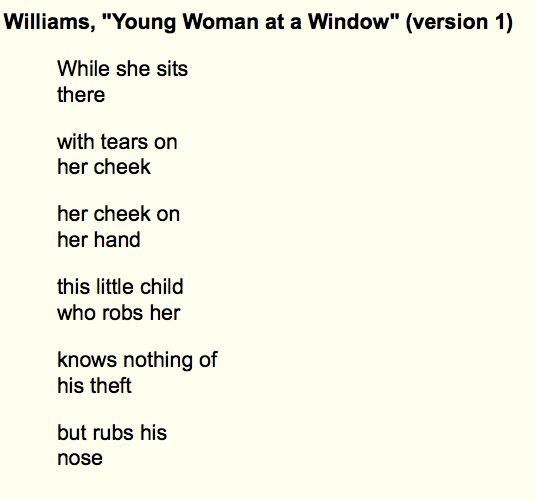
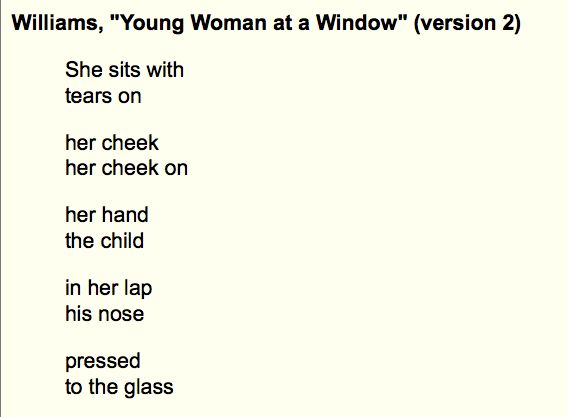
There has been much written about William Carlos Williams’ “Young Woman at a Window”, and while we know that second version is the one that Williams ultimately published, it is fascinating to trace the condensation from the first poem to the second, and to explore why the second poem not only adheres better to the imagist manifesto, but is also objectively speaking, a more powerful poem. While both of the poems feature the same objects: a woman and a child at a window, and both have similar structures and the same number of stanzas, the second version has been reduced to 23 words from 29, with a more even cadence and couplets, beginning and ending with 3 words.  The first version is more narrative, leading the reader towards a sentimental conclusion.  The second version of the poem allows the reader to make his or her own inferences, leaving the image clear of inference. In version 1, specific words and sentence structures are used to evoke sentiment. The reader is told that the child has “robbed” the woman, and is unaware that he’s done this.  Also the child rubs his nose – an unappealing act linking the woman’s tears to the boy, and something about the demands of parenting.  That the boy needs his nose wiped becomes the denouement for the poem. In addition, the delicate early rhythm of the poem and its first word repetition is marred by words like “this”, “who,” and “knows” which break the cadence with sentence structure type inclusions that further progress a narrative. 

In the second version of the poem, Williams has condensed the image and removed extraneous words or “vague generalities” like ‘robbed’ and ‘knows nothing’, and actions like ‘wiped his nose’.  Instead the image is static—frozen in time like a statue, and is rather more beautiful as a result.  There are no runny noses here or self-pity.  The reader is confronted with, in the words of the imagists, an “exact visual image” which makes its statement completely. The reader is left free to make inferences about the nature of the tears, about the symbolism of the window which hints at inside versus outside without stating it overtly, and about the reason for the two sitting together in such a pose.

Though there is no expression of ‘robbery’, the image is suffused with sadness and longing, but only by virtue of the imagery. Ending the poem on the word “glass” creates a perception of being cloistered, without the need to state it.  Finally, and perhaps most importantly, the second poem not only uses the image itself to convey meaning, but it is structurally and rhythmically aligned, using repetition and alliteration of the words “her” at the start and “on” at the end of the first three stanzas, and the sibilance in “nose”, “pressed”, “glass” which convey both silence and tears.  This poem works perfectly when read out loud, encouraging the reader to just look, to just feel and just participate directly in the subtle longing and sense of cessation conveyed by the poem.

Sunday, October 4, 2015

Poetry Monday: A liquor never brewed

Those of you who have followed this blog for a while (or who know me) know that I’m a massive fan of the annual event known as Modern and Contemporary American Poetry or ModPo run out of Coursera by the University of Pennsylvania.  The event masquerades as a course, run for 10 weeks by the amazing Al Filreis and his exceptional team of Teaching Assistants and Community Teaching Assistants. You can certainly attend, get your certificate of attainment (or just follow along), and go on your merry way at the end of it (with a totally new approach to reading and appreciating poetry that extends way beyond the syllabus) - that’s enough of course.

For me and many others, once is just not enough.  The course has become an annual excuse to revisit some of the most seminal poets of all time, to do close, but not too close, readings of some exceptional and challenging poetic work.  Al has encouraged former students to come back and keep playing every year, through new material, through mentorship opportunities, new live ‘meet-ups’, new opportunities for interaction, and new approaches.  Though the numbers get larger each year, the intimacy somehow seems to grow too.  This year, there’s a new section for those who either want something a little different or who want to go further and deeper into the work.  It’s called ModPo Plus and it features complementary poetry and its own discussion forum.  Since I’ve done ModPo before, I’m working through all of the normal ModPo material and all the poems in ModPo Plus but focusing most of my discussions around the ModPo Plus material at the ModPo Plus forums.  Most of my essays will have the same topic as they have in previous years, but I’m enjoying revisiting the work and coming to it with beginner’s mind - maybe going just a bit further as I explore my assignment topics.  I thought it might be fun to post those essays up here.  Please feel free to put your own thoughts or essays into the comments.  I like the idea of these discussions spreading outwards and repeat ModPoers are encouraged to facilitate that.  Oh, and if you want to join ModPo it actually isn’t too late.  You can’t get a certificate as the first assignment date is passed, but you can jump right in at Gertrude Stein and join in now.  The community is very warm and inclusive and nothing is mandatory.

Here’s the little essay I wrote on Emily Dickinson’s “I taste a liquor never brewed”.  The full poem can be found here: https://www.poets.org/poetsorg/poem/i-taste-liquor-never-brewed-214

Of all Emily Dickinson’s poetry, “I taste a liquor never brewed” is one of the most exuberant, piling image upon image in an extended metaphor.  This poem is somewhat less condensed than much of her other work, freed from constraints by the drunken slur of dash and the repetition of exclamation mark. The quatrains use a ballad form but only rhyme the second and last word of each stanza, and the initial rhyme (“Pearl” and “Alcohol”) is off, which adds to the slightly arrhythmic, wild feel as it flows from first taste to the full satiation of inebriation.

In the first stanza we we’re introduced to what the poet is drinking: a rarified drop, stronger than any produced in the famous Rhine wineries. This ‘drink’ is delivered from “Tankards scooped in pearl”, which is more evocative than specifically semantic, but suggests something like a large shell (mother-of-pearl lined), or perhaps a cloud formation with the sun shining behind.  This intoxication comes from the exquisite beauty of the natural world (eco-poetics at its best).

There’s a sense in the second stanza, through rhythm, image, and punctuation, of a little subversiveness.  The poet has become debauched and drunk, though not on brewed liquor, but on air, on dew, and on the blue sky of summer.  Each dash functions as a pause or even a hiccup, coupled with extensive alliteration to create the rhythms of drunkenness that invite the reader to also partake.  The multi-sensual impact of a blue sunlit sky captured with such precision in “Molten Blue”, provides both warmth and visual appeal, but it’s more than the flower, the sights and scents of a striking summer day. It’s the impact of that day on the poetic imagination that turns it from a moment of experience to something permanent. This is the creative flow or wellspring that the poet taps into (to keep the liquid metaphor going).  It is Emily’s meta-poetic implication that turns this otherwise heady pastoral poem into something quite post-modern.

The extended metaphor of a drunkard at the inn is stretched further in the third stanza, as day becomes night and the poet continues the creative spree.  The landlord might be the foxglove itself, closing petals so that the bee and butterfly, that have had their fill of sweet nectar, can drink no more.  For the poet, the “high on life” inebriation doesn’t end because there’s always more beauty in the endless creative flow in this figurative inn where the tap is always open.

The final stanza shifts from the nature metaphor into a more frigid heavenly one, away from the immediacy of sensual pleasure.  From these lofty heights, beyond the window, an angel (“Seraphs”) or teetotaler saint might look down from a frosty (“snowy Hats”) heaven and disapprove of such excesses of sensual joy. The reader too, who has been encouraged in the first three stanzas to partake, might disapprove of such poetic licentiousness. After all, this is the full sensual experience – sight, sound, smell, touch and taste are all evoked in a reeling swirl that is quite overwhelming.  Of course, we might just join in in this moment of creative power and shared delight and let ourselves be seduced.