
If you're not a subscriber, you can subscribe for free at http://www.compulsivereader.com.
Happy reading!
"'Book' shop" by Elsie esq. is marked with CC BY 2.0.
If you're not a subscriber, you can subscribe for free at http://www.compulsivereader.com.
Happy reading!
"'Book' shop" by Elsie esq. is marked with CC BY 2.0.
Written by Jean Huets
The Russian invasion of Ukraine has highlighted literature about Ukraine and by Ukrainians as never before. Lists of books help us grasp the dimensions of the crisis. But nearly all the compilations, however worthy, neglect the most raw and immediate medium of literary expression, a medium that, with music, is a culture’s most portable, and often most enduring, legacy. That is, poetry.
 The Soviet era challenged the very survival of Ukrainian poetry. One of Ukraine’s most eminent twentieth-century poets, Vasyl Stus, was floated as a likely Nobel Prize nominee in 1985. At the time, however, he was in a Soviet concentration camp, under a ten-year sentence for “manufacturing and distributing literature derogatory of the Soviet government and society.” The problem Stus thus posed for the Soviet government—an internationally acclaimed “criminal”— was tragically extinguished when Stus died in solitary confinement at the “death camp” in Kuchino.
Oksana Zabuzhko is another Ukrainian writer whose voice was stifled. She made her poetry debut in 1972, but her parents’ blacklisting during the Soviet purges prevented her first book from being published until the 1980s. Fortunately, Zabuzhko lives today as one of Ukraine’s foremost public intellectuals and writers.
Ukrainian-born poet and translator Nina Murray describes the contemporary Ukrainian poetry scene as dynamic and diversifying, with women leading the charge, especially in terms of breaking gender norms. Publishers, inside and outside Ukraine, are scrambling to catch up. A 2017 ban on the import of Russian-published books created panic in the industry, since over sixty percent of books sold in Ukraine were from Russia. The ban was eventually lifted, with a stipulation that at least fifty percent of books sold in Ukraine must be in the Ukrainian language. Free market enthusiasts may lament, but the measures injected life into Ukrainian publishing, and Ukrainian-language literature blossomed.
As Ukrainian-to-English translators gain traction in the literary field, English speakers gain more and more access to Ukrainian works, though like any language, Ukrainian poses unique challenges to English translators. Murray cites a “metaphorical distance” between the two languages. “Ukrainian is more tolerant of synesthesic metaphors — mixes of sound and sight, for example — that may read as jumbled or just weird in English.” An excerpt from Apricots of Donbas, by Lyuba Yakimchuk, evokes the poetry of Federico Garcia Lorca, which has a way of making the surreal more real than “reality”: “when tears / turn to rock salt / when the sea in the stomach / turns into a coal mine.” Ukrainian also lends itself to rhyme, like the Italian language, a potentially awkward situation to the English-language translator.
Toward raising awareness of contemporary Ukrainian poetry accessible to English speakers, Murray shared with me a list of Ukrainian poetry collections available to English-language readers. The list is presented here in alphabetical order by author’s last name.


Nina Murray’s own poetry collection shouldn’t be left out. Alcestis in the Underworld (written in English), articulates the poet’s paradoxical experience of civic duty: her life in Moscow as a U.S. diplomat, after growing up in then-USSR Ukraine. The poems of Alcestis in the Underworld ring eerily prescient, with their sense of a gathering threat and a constant effort to cut through a propaganda-fed veneer of normalcy. Murray’s translation of Lesia Ukrainka’s feminist, poetic drama Cassandra, first produced in 1908, won the Ukrainian Institute London’s 2021 Ukrainian Literature in Translation prize. A discussion with Murray and excerpts from the play, spoken by professional actors, can be seen on youtube LINK: https://youtu.be/q_hSHH-63oY )
(Circling Rivers)
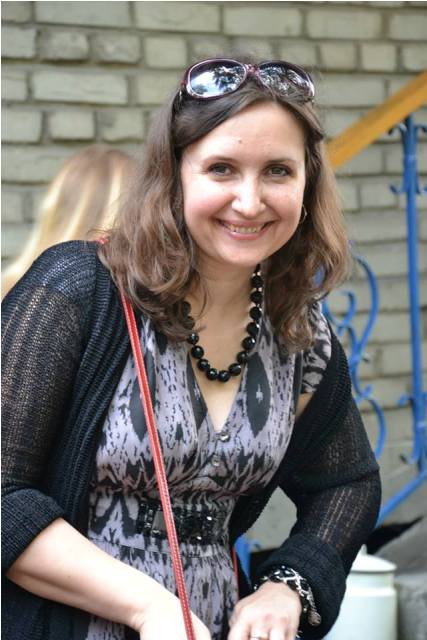
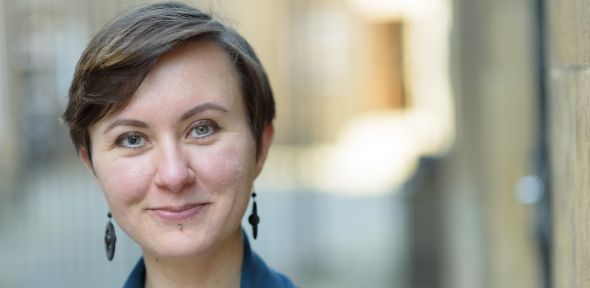


Oksana Zabuzhko was named by literary scholar Maria Rewakowicz “the most important contemporary female author in independent Ukraine.” Though most well-known to English-language readers as a novelist and essayist, as a writer she identifies herself as a poet. Excerpts from her Selected Poems can be read online on the Arrowsmith Press website. Zabuzhko’s controversial novel Field Work in Ukrainian Sex launched her to international renown and remained on the Ukrainian bestseller list for over ten years.


About the author: Jean Huets is author of With Walt Whitman, Himself, acclaimed as “a book of marvels” by poet Steve Scafidi and “a true Whitmanian feast” by scholar Ed Folsom. Her writing is in Kenyon Review, The Brooklyn Rail, The New York Times, The Millions, North American Review, The Rumpus, On the Seawall, Ploughshares, and Civil War Monitor. She co-founded Circling Rivers, which publishes literary nonfiction and poetry. Visit www.jeanhuets.com
 Hello lovely readers. The Compulsive Reader newsletter for March is now on its way to your inbox. This month's issue features 3 new giveaways (get your entries in!), 11 new reviews including new books by Sutanuka Ghosh Roy, Lou Matthews, Fiona Sinclair, Keith Kopka, Louise Wakeling, Morgan Bell, Jennifer Maiden, Jessica Au and Robert Lopez, as well as interviews with Javier Sinay and Robert Croll, Tessa Wegert, and on the podcast, Jessica Au reads from and talks about her new book Cold Enough for Snow. As always we have a big roundup of literary news which includes such things as the Dylan Thomas prize, the International Dublin Literary Award, the Audies, the Story Prize and lots more. If you can't wait for it to arrive, or want to check it out before subscribing, you can find it in our archive here:
 To subscribe, visit: http://www.compulsivereader.com
Image: "Book" by Kamil Porembiński (CC licence)

"'Book' shop" by Elsie esq (Les Chatfield) is licensed under Creative Commons via OpenVerse

We also have two terrific new giveaways for January and of course a big round-up of December's literary news. To grab a copy or check out the newsletter now, visit: http://www.compulsivereader.com/sendpress/eyJpZCI6MCwicmVwb3J0IjoxNjg2MiwidmlldyI6InRyYWNrZXIiLCJ1cmwiOiIlN0JzcC1icm93c2VyLXVybCU3RCJ9/
To sign up or browse our extensive database, visit http://www.compulsivereader.com and use the sign up box on the upper left hand side or search by genre, title, or date. Happy reading!
Image: "DAY 6/365 - Books" by Fliposopher is licensed under CC BY-NC-ND 2.0

Both reviews are beautifully written and deeply considered and I feel so grateful for the attention this little book has received from these generous and intelligent souls.

"book stack" by ginnerobot is licensed under CC BY-SA 2.0
