Wednesday, January 25, 2012

9 Coolest Literary Siblings (guest post)

Emotions run high between siblings, be they brothers, sisters, and/or brothers and sisters. It really doesn't matter how old or what gender you are, being in the same room with a person who not only looks like you but also looks like one or both of your parents can inspire equal feelings of love and revulsion. "Mom always liked you best!" is a familiar familial complaint in spite of the fact that "Mom" loves each one of her kids equally and only wants you to stop dumping oatmeal on your sister's head. Great writers throughout the ages have had a field day with the sibling dynamic. And there are so many variations on this theme it's almost hard to know where to begin.

Franny and Zooey Glass in Franny and Zooey (1961) by J.D. Salinger Book One features Franny on the verge of a nervous breakdown. In Book Two, Franny has had the breakdown, and her brother Zooey, whose bedside manner leaves much to be desired, tries to bring her back from the abyss. He resorts to phoning Franny and pretending to be their kinder, gentler brother Buddy, which (predictably) doesn't work for long. In the end, the memory of a telling incident with a third brother, Seymour (dead by suicide), provides Franny with the lifeline she needs.


Cinderella by Charles Perrault (1729)
Cinderella's evil stepsisters may be the most realistically portrayed in literature when it comes to unchecked and cruel behavior toward gentler, and kinder members of a family. Although the Brothers Grimm retold "Cinderella" in their 1812 collection, the original tale may date back as far back as Ancient Greece. Does this mean women, disregarding for argument's sake men and Air Jordans, have always had an inexplicable obsession with shoes?


Lucy and Freddy Honeychurch in A Room With A View (1908) by E.M. Forster
Lucy seems to let her hair down only when dear brother Freddy is around. Freddy, who never warms up to Lucy's fiancé, the stuffy, stick-up-his-ass Cecil, unknowingly befriends George, a free spirit who smooched Lucy earlier in the book during a somewhat traumatic trip to Italy, and set the wheels in motion for Lucy to find true love and remain an independent spirit. Now that's being a good brother!


Sisters Celie and Nettie in The Color Purple (1982) by Alice Walker
Walker's novel is filled with iconic characters, two of the most memorable being Celie and her sister Nettie. Celie is finally able to emerge as a strong, self-determined woman, in spite of the years of unimaginable abuse she's endured, in part through her bond with and love for her sister.


Third cousins Charlie and Paulie Moran in The Pope of Greenwich Village (1979) by Vincent Patrick
To paraphrase one of the book's characters, third cousins to Italians are like twin brothers to the Irish. Not even Italian mobsters and corrupt Irish cops can sever the sense of loyalty that Charlie and Paulie share with each other. Paulie's almost sociopathic disregard for holding down a job and settling down pushes their relationship to the brink, and yet somehow, things never go completely over the edge.


Twins Tweedle Dum and Tweedle Dee in Through the Looking-Glass, and what Alice found there (1871) by Lewis Carroll
For his sequel to Alice in Wonderland, Carroll sampled this duo from an old nursery rhyme. The characters appeared in the beautiful, Disney animated film Alice in Wonderland and director Tim Burton's twisted take on Alice and Through the Looking Glass. An example of how these two are a part of our popular vernacular, Ralph Nader famously referred to George W. Bush and Al Gore as "tweedle dum and tweedle dee" with regard to each man's policies regarding corporations.


Caleb and Aaron in East of Eden by John Steinbeck (1952)
Brothers Caleb and Aaron mirror Cain and Abel from the Book of Genesis, which Steinbeck repeatedly alludes to throughout his novel. The level of cruelty that family members are capable of exacting upon one another is a major theme in what Steinbeck considered his greatest novel.


Hansel and Gretel retold by the Brothers Grimm (1812)
Hard by a great forest dwelt a poor wood-cutter with his wife and his two children." How can you not love two kids who, abandoned in the woods by their wimpy father and psychotic (step?) mother are nearly eaten by a cannibalistic witch living in a house made of candy? Even 21st century kids identify immediately with these two little ones and how they stick together even in the scariest of circumstances.


Charlotte, Emily, and Anne: The Brontë sisters
Okay, they're not fictional, but their accomplishments for their time (early to mid 1800's) were so unusual, they each wouldn't be out of place as a character in a novel that any of them might have written. Interestingly, considering that the Brontë sisters grew up mutually supporting each other in the shadow of an abusive father as well as sharing their earliest writing efforts each other, they are each best known for creating almost autonomous heroines, like Charlotte's orphaned Jane Eyre or Helen Lawrence Huntingdon in Anne's The Tenant of Wildfell Hall.

Article originally published at:
http://www.bestonlinecolleges.com/blog/2012/9-coolest-literary-siblings

Monday, January 23, 2012

Poetry Monday

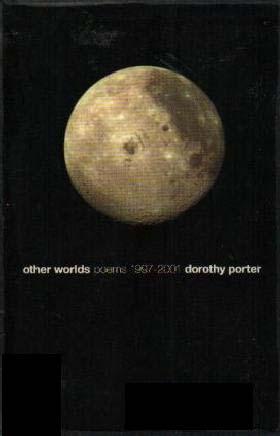
As part of the Reading blog comment challenge, I've been visiting (and commenting on) a lot of blogs, and one of the trends I've noticed is a regular day-of-the-week post on a particular topic.  I like the idea, so I've decided to begin a Poetry Monday series in which I reprint something I've come across in the previous week that I've liked.  This means I've got to read some poetry the week before, which is always a worthwhile way to spend time, and good for me as a writer too since I'm working on a book, and reading poetry is the best way to stimulate writing it - it gets your mind in the right observant groove. For this first blog, I thought I'd feature a poem I love so much for all its terrible beauty, I've committed it to memory.  It's the great Dorothy Porter's "III" from her "Comets" series in Other Worlds (Picador, 2001). What have you read that you've loved so much it's stayed with you, moving through your skin into the very fabric of you you are?

What voice of dirty ice
is talking in my head?

I can't watch the sky
without ringing Heaven.

My heart ticking as slowly
as poison
over its hissing dial tone.

Pick up, Heaven.
Please pick up.

It's me.

Tuesday, January 17, 2012

Skip the card this year

I'm not normally a sentimental girl, but it never hurts to say something real and loving (yes, both at the same time) to someone you love on Valentine's Day (or anytime).  I have to admit that, having just thrown out another batch of high priced Christmas cards, I'm loathe to invest in any more cliché laden pieces of pretty cardboard. Instead I thought I'd spend my Valentine's Day immersed in a little love poetry.  One of my favourite love poetry collections is Luke Davies Totem.  I also like ee cummings' "speaking of love", and Amiri Baraka's "In Memory of Radio" - two unsentimental but stunning poems that instantly come to mind when I think of love.  Since Feb 14 is fast approaching, I thought I'd do a little recording of one of the poems in the "unconventional love poetry" collection I co-authored with Carolyn Howard-Johnson titled "The Ocean". 


The Ocean

Spotting your face
not for the first time
the transportation
that fractured place
between absolute familiarity
(near invisibility)
and the shock of new.
 

There’s no feature
(as familiar as my own)
not a wrinkle
I haven’t traversed.
 

Yet you turn your profile
in the gentle
fluorescent light
and my audible
(inaudible)
gasp
is the voice
of a girl
discovering
the bountiful
ocean.
 

From now until the 17th of Feb, drop by Smashwords and use coupon code EL42C for a completely free copy of Cherished Pulse.  If you prefer a hard copy, which does make a very attractive (and unsentimental) gift just drop by Amazon.  Happy Valentine's Day to you.  XX

Monday, January 9, 2012

2012 Aussie Author Challenge

I figured this one was a no brainer resolution - an easy and fun win.  I read so many Australian books, not only because of proximity and because I get delightfully courted by Aussie publicists and rarely can say no to a thoughtful, well-crafted, personalised recommendation, but also because so many fresh, innovative books seem to come from this continent.

So what's the challenge?  Between Jan and Dec 2012, I'm to read and review 12 books by at least 6 different Australian authors.  That's for Dinki-di ("genuine Australian") status and I think, after 24 years in this country, and all of those years reading a fantastic range of Australian authors, I qualify.  I'm starting the year with Jan Mitchell's tinker, tailor soldier, sailor... - the biography of Colin Kerby, which I've nearly finished.  Then it's Amanda Curtin's Inherited (I've got an interview with Amanda early in Feb, which should keep me on track), followed by Luke Davies' Interferon Psalms.  Plenty more Aussie books waiting for me after that too (though I might take a little break to read Edna O'Brian's review of James Joyce followed by Umberto Eco's The Prague Cemetery - oh with such a gorgeous pile I could do nothing but read for 4 months...).  All reviews will be published at The Compulsive Reader, but I'll cross link at the Aussie Author challenge page on Booklover Book Review.  Why not join me?  You don't have to read 12.  There's a 3 book 'tourist' option.  If you decide to join up, and drop me a line and I'll send you a free ebook of mine of your choice to help you along.  Yes, I'm an Aussie Author.  I've got my certificates to prove it.  G'day mate.

Wednesday, January 4, 2012

Guest blog: Self-Publish Your Writing! by Michael Lydon

Here’s a word to wise writers:
Self-publish!
Sounds so good, let’s say it again:
Self-publish, self-publish, self-publish!

The bug bit me in 1990. I heard someone say “desktop publishing” and I flipped. I’d been writing for two-plus decades and had three books on pop music out from big time publishers. Now I wanted to write about writing. But how could I, with no track record in the crowded field, get a deal? The answer: no way in hell.

That’s when “desktop publishing” came to my rescue. Now I didn’t have to wait for some company to give me their seal of approval. I’ll make little books of my essays all by myself. All I needed was a computer. Which, in 1990, I didn’t have. Fortunately my big brother Peter in California did, and he typed my eighty-five-page typescript into a DOS IBM file and mailed me the floppy disc.

That I took to a computer storefront where, for $5 an hour, I sat in before a green screen with yellow letters and formatted my masterpiece, flipping the page setup from portrait to landscape and setting the margins to make a 7 by 4 inch text block on the left hand side of the page. When printed, those sheets became my page proofs Making the “signature,” the mock-up book that showed me how to lay out the pages, I found tricky: it turned out that page 12 had to be pasted up opposite page 61. That gave my brain a definite twist, as you’ll see when you do it yourself.

That’s why I encourage you to self-publish: DIY is the best learning experience in the world. Every step I’m outlining so swiftly—picking out a color for the cover (I went for bright yellow), watching the machine disgorge the pages, then holding the first copy of the beautiful finished book—will be a richly creative experience. You’ll get nervous, make mistakes, and tear your hair, but you’ll also laugh out loud, do triumphant little dances, and glow inside: “I did it, by George, I did it.”

In two decades I’ve made fifteen such books. None of these “messages in a bottle” have yet floated into the hands of a critic who writes the review that sets me on the road to glory, but I’ve had one signal success: a university press discovered and published Writing and Life, the first book with the yellow cover. If Writing and Life had come in as a typescript, the editor never would have looked at it. The cheerful homemade book made him think, “Hmmm, this could be interesting.”

Recently, at a Manhattan bookstore, I’ve found a dreamy Rube Goldberg device called the Espresso Book Machine (http://www.ondemandbooks.com to find one near you) that will accept a properly formatted flash drive and then, click-click-click, create a gorgeous perfect-bound paperback with a four-color cover in five minutes. Two bright young staff women answered my FAQs and helped me over beginner’s hurdles. Basic charge: $100 for set-up and first trial copy; after that I got one revision and as many books as I wanted at two cents a page; any trim size I pleased. Hard to believe, but it’s true; I’ve done two books there already, the 71 pp Now What? and the 270 pp Real Writing.

The other book-making writers I meet at the Espresso Book Machine are, like me, tingling with the priceless pleasure of declaring our independence, speaking and acting and investing with a belief in ourselves and what we have to say.

Self-publishing pays more than spiritual benefits. The E-era is creating upheavals in the writing marketplace; no one knows where tomorrow’s bestsellers will come from, who’s going to write them and who’s going to publish them. So, c’mon, take your beloved masterpiece out of that desk drawer, spend a dozen hours editing and formatting it, put a few hundred bucks into making fifty copies, place them on consignment at a local bookstore and send out an email blast to everyone you know. If you’re lucky and this leads to that and that leads to this, you’ll have a little Amazon hit on your hands.

Or not, in which case your unsold inventory can answer your what-to-give-Auntie-Jessie-for-Christmas questions for years to come. Either way, you’ll reap the greatest benefit of self-publishing: the good it will do your writing.

Books have a magic that loose-leaf sheaves of paper do not. Being in books changes writing. Their stiff covers define, enclose, isolate, and protect writing. Their close laid lines of type, justified right and left, give writing a bolder visual image than the raggedy wide open spaces of a double-space typescript. Balzac rewrote his novels not by editing manuscripts, but by scrawling all over printers’ galleys: only in print could he see what he did and didn’t want to say.

So write with the goal of reading your words in a book, and your writing will improve. Make a book, and you’ll nourish your writing by linking to the ancient history of books. A book’s modest self-assertion, its age-old structure of numbered chapters, its calm procession of pages from the title to “The End”: all will suggest to you words and phrasings that will make your prose or poetry more plain, personal, and persuasive.


Don’t be a perfectionist, especially on your early efforts. Get your first book done however cock-a-hoop it comes out. Then put all you learned to work on number two, and number three, and number four, and….

Michael Lydon runs Franklin Street Press, initialy founded as Patrick Press in 1990. Franklin Street Press is a small company based in New York’s bustling East Village. Lydon is CEO, chief writer, book designer, and cook and bottle washer. Ellen Mandel photographs, edits, and proofreads. Peter Lydon, Michael’s elder brother, consults from his home in Berkeley, California. Michael is also a musician, singer-songwriter, whistler extraordinaire, and a writer of critically acclaimed books.

Monday, January 2, 2012

Lovely new flipping mini-book courtesy of my publisher

My publisher Bewrite Books, is always looking for innovative new ideas to help their authors promote.  They've recently done a complete revamp of their website, and have provided lovely flipping mini-book samples which can be downloaded for free.  Here's my most recent poetry book, Repulsion Thrust:

http://bewrite.net/mm5/FlippingBooks/RepulsionThrust/index.html

For those of you who love and support poetry, if you enjoy the mini-book, please consider grabbing a full copy for your Kindle or ereader in any format for only $2.99.
 
There's also one for my novel Sleep Before Evening: http://bewrite.net/mm5/FlippingBooks/SBE/index.html

And very soon, you'll see my brand new novel Black Cow in all its flipping glory (don't worry, I'll let you know when it's out). 

For those of you with your own books to promote, you might enjoy checking this new promotion out as an idea to generate interest and provide free sampling of your work.  It's pretty cool. Can't accuse this team of being luddites.

Friday, December 30, 2011

Guest Blog: What Makes a Good Fiction Story: Plot Driven or Character Drive? by Karen Cioffi


(Excerpt from How to Write Books for Children – Writing, Publishing, and Marketing Children’s Books by Karen Cioffi)

Stories can be plot driven or character driven, so which is the best formula to use when writing a story? Knowing a little about both methods should help in making a decision.

Plot Driven Story

A story’s plot moves the story forward, from point A to point B. It doesn’t necessarily have to be in a straight line; in fact a course that twists and turns is much better. This type of plot creates movement and interest. It’s the twists and turns that will keep the forward momentum fresh, as well as create anticipation. Anticipation will hold a reader’s attention.

The plot also provides reasons and explanations for the occurrences in the story, as well as offers conflict and obstacles that the protagonist must overcome to hopefully create growth. These elements create a connection with the reader. It entices the reader to keep turning the pages.

Without a plot it is difficult to create growth and movement for the protagonist. It might be comparable to looking at a still photo. It might be a beautiful photo and may even conjure up emotions in the viewer, but how long do you think it would hold a reader’s attention?

Along with this, the plot molds the protagonist. It causes growth and movement in the character. Assume you have a timid woman who through circumstances, the plot, transforms into a brave, strong, forceful hero. Where would the story be without the events that lead this timid woman to move past herself and into a new existence?

Character Driven Story

On the other hand, a character driven story creates a bond between the protagonist and reader. It is the development and growth of the character, the character’s personal journey, which motivates the reader to connect. There doesn’t need to be twists and turns, or fire works. The reader becomes involved with the character and this is all the enticement the reader needs to keep reading.

In addition to this, the character works hand in hand with the plot to move the story forward. As the character begins her transformation the plot moves in the same direction.

In some instances, such as short stories, a character driven story can work amazingly well, such as in The Story of an Hour by Kate Chopin. In cases such as this, the connection developed between the character and the reader can be more than enough to satisfy the reader. But, all in all, it seems to be the combined efforts of a well plotted and character driven story that works the best.

The Best of Both Worlds

According to science fiction and fantasy writer, L.E. Modesitt, Jr., “The best fiction should be an intertwined blend of character, plot, setting, and style.”

The elements of a story working together, creates a story that will be remembered.

All the aspects of a story should complement each other, should move each other forward to a satisfying conclusion, and should draw the reader in.

If you have an action packed plot driven story, but it lacks believable and sympathetic characters, you’re story will be lacking. The same holds true if you have a believable and sympathetic character, but the story lacks movement, it will usually also fall short. As with all things in life balance is necessary, the same holds true when writing a story.

~~~~~~~~~
Karen Cioffi is a published author, freelance writer, and marketer, and to start the New Year with a BANG, from January 1 through February 28, 2012, she is offering all her writing and marketing e-books (purchased directly from her site/s using the Paypal SHOPPING CART) for a $1.19 each. And, this will include new titles added within that time period.

For a complete list of the available titles and links to more information:

For a complete list (with brief descriptions of each ebook) go to: http://www.karencioffiwritingandmarketing.com/p/karens-books.html