Thursday, September 29, 2011

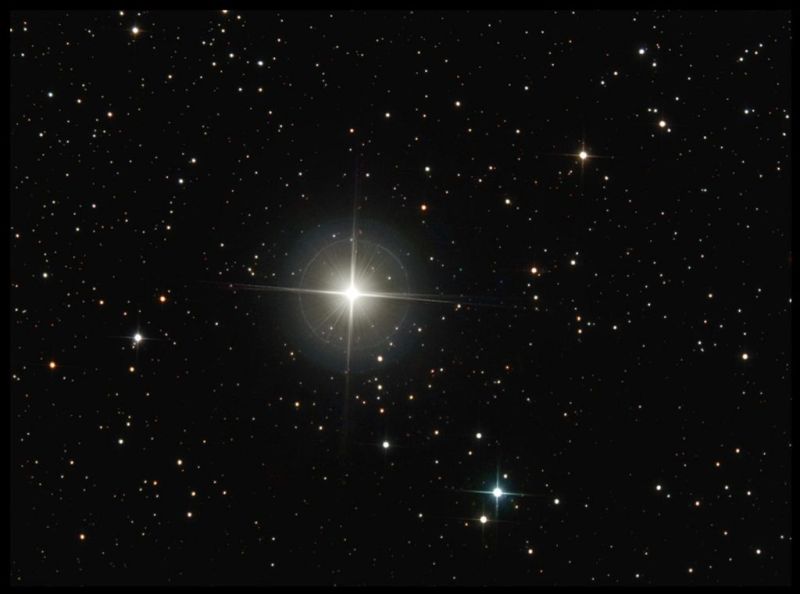
Bright Star


I know it's two years old now, but last night I watched Bright Star, and this morning my daughter, who watched it with me, was so inspired (she's a romantic thing) that we've spent a very pleasant morning reading the poetry of Keats, complete with my handwritten college scribbles from the Norton Anthology of Poetry (Third Edition), which has stayed with me for many years and comes out surprisingly often (I love my Kindle but can assign no such sentimental value to the books it contains). The film was lovely, romantic as one would expect, and firmly grounded in and defined by Keats' work.  Normally my poetic tastes tend towards the moderns and post-moderns.  But I've enjoyed re-discovering the romantics today. In honour of the film, and of my daughter's sudden and quite satisfying interest in the poets of the romantic era, I thought I'd provide you with the full text of the poem that gave the film it's name.  By the way, my daughter had me look up Eremite for her, and for those of you who don't know, it's a religious recluse. As usual, Jane Campion, you've outdone yourself.

Bright star, would I were steadfast as thou art —
Not in lone splendour hung aloft the night
And watching, with eternal lids apart,
Like nature's patient, sleepless Eremite,
The moving waters at their priestlike task
Of pure ablution round earth's human shores,
Or gazing on the new soft-fallen mask
Of snow upon the mountains and the moors--
No--yet still stedfast, still unchangeable,
Pillow'd upon my fair love's ripening breast,
To feel for ever its soft fall and swell,
Awake for ever in a sweet unrest,
Still, still to hear her tender-taken breath,
And so live ever--or else swoon to death. 

Sunday, September 25, 2011

Banned Books Week Virtual Read-Out: Joseph Heller's Catch 22

Banned Books Week runs from Sept. 24 – Oct.1, when readers around the world are encouraged to celebrate books that often get banned in various places around the world.  There are other books that have been banned more often than Catch-22, but it's Catch-22's 50th anniversary, and it's looking pretty darn good for its age.  I just got sent this lovely new edition by Random House, with a soft matt finish cover and have been enjoying it immensely, not only for the sharp spotlight it shines on the kind of overt bureaucratic absurdity that is no less relevant today than it was 50 years ago, but also because of the superb writing. For example, check out these two sentences: "Hungry Joe was a throbbing, ragged mass of motile irritability.  The steady ticking of a watch in a quiet room crashed like torture against his unshielded brain." Is that superb characterisation or what?  Catch-22 was banned in Strongsville, Ohio in 1972 and that decision was overturned in 1976. It was also challenged in Dallas, Texas (1974) and again in Snoqualmie, Washington (1979).   Here's a little clip I prepared for the global 'read-out' in which I read about the "catch" (the best catch there is...):

Friday, September 23, 2011

Open the pod bay doors, HAL

Perhaps this isn't the first time that a fictional construct has been cited in a court case as prior art (art in this case, being used in a literal sense), but it's the first that I've heard of it.  Of course I'm talking about the patent dispute between Apple's i-Pad and Samsung's Galaxy Tab which have cited the images in the film 2001: A Space Odyssey as evidence of prior art. The implications of this are interesting to me, and I wonder whether it will elevate art to a new level in terms of the relationship between conception and development.  Does a visual hypothesis equate to pre-conception.  Of course it's a long way from an imaginary conception to a working prototype and it appears that the German courts have rejected the Kubrick Defence, which is, of course, not called the Clarke defense, since it's design that we're talking about here. In other words, it's the visuals in the film, and not the description in the book that has been cited.  Nevertheless, the very fact that it was raised creates an interesting hornet's nest about the 'hypothesis', industrial design, and artistic conception and the interrelationship between them, particularly from a legal point of view.  As an author, I'll be watching the ongoing outcome with interest, and thinking about the power of art in new ways.

ps: I loved 2001 - one of the very few instances where I felt the film was better than the book. 

Wednesday, September 21, 2011

Healing the World with Poetry (guest blog)


by Joyce White

Poetry makes an excellent conversation beginning with a lump in the throat then spilling out like liquid honey so sweet, savory, ending in the most natural wisdom, To be a poet, you need to know when to listen and when not, as well as begin every day with a moment of silence, during the day listen to the children who are always on, we can learn as much from them as they us,

Poets need to befriend isolated thinkers, to enjoy their gift of gab, to recognize universal truths, listen to their intuitions, and welcome the muses that are their best fans,

Poets need to give credence to the “unseen” and to know that there is no coincidence, and be appreciative of free will,

Poets need to ride the winds with glee that blow through their minds, and to write those thoughts down before someone else does or before they're forgotten all together.

Poets need to learn to appreciate the sun setting, a bird call, a quiet garden, a clear sky, and a creative effort with an unambiguous pen. Genuine poetry can communicate before it is understood, the unknown healing all wounds of reason.  

Words are healers whether we are writing them, singing them or reading them. Of course, a loving friend can be a healer. A song can be a healer. A celebratory greeting card can be a healer.  We all enjoy healing through the music of words and images.

Both reading and writing poetry are forms of therapy for the reader and the writer. Writing poetry is an excellent way to pay renewed attention to the masters and their art. They inspire us to turn their art into “our art” through films, paintings, poetry or even clay sculptures. None of us write alone without carrying on our back the whisperings of others.

There is no such thing as writer’s block when we use others ideas to inspire us. Poetically speaking, I think most poets are like honey bees hungrily searching through a grand buffet of literature, film and/or art for that speck of pollen we can turn into honey. Besides authoring two books, I had a lot to say and needed a way to say it, so I started experimenting with poetry.

But in truth, humans like to make everything a game especially writers and poets. We play connect-the-dots with words and feelings, paying close attention to the sound and flower of our memories, as well as their arrangement on the page. I play connect-the-dots with sentences, images and/or word pictures.

I’m always looking for an initial thought burst, a memory or a feeling I can blow out of proportion and use in a grand over-indulgent way when writing poetry. “You may discover your best poems while writing your worst prose.” says Joyce Carol Oates. “As soon as you connect with your true subject, you will write.”
If I had to describe my inner poet, I’d say he looked at the world a little eschewed. He lives patiently in me, giving me fragrant hope where there was once none. He inspired me to write although it never occurred to me I was a poet. I come by using words for healing by instinct.  

I’ve read an author must be like God, present everywhere but visible nowhere. Somerset Maugham says, “If you can tell stories, create characters, devise incidents, and have sincerity and passion, it doesn’t matter a damn how you write.” Samuel Johnson says, “The two most engaging powers of an author are to make new things familiar, and familiar things new.”

When the right words come, they are as beautiful and unsought as country wild flowers. There are many ways of being artful. To write poetry I sometimes start out with the words, “I am…or I am silly…or I am afraid…or, I am not like anyone else. You can also write a Pet Peeve Poem, by reacting to a common, everyday annoyance like the phone ringing when you’re in the bathroom! Choose a subject that really irritates you enough to be memorable or humorous.

Decide if you want your poem to be serious, playful or sarcastic. There is something about our milestones that beg to have their passes marked on paper even our annoyances and mishaps. Our only goal is to be truthful, and if we can fake that on paper, we’ve got it made. Mark Twain says, “Most writers regard the truth as their most valuable possession, and therefore, are most economical in its use. Elvis Presley says, 
“Truth is like the sun. You can shut it out for a time, but it isn’t going’ away.”

John F. Kennedy, speaking at the dedication of a library for Robert Frost, less than a month before he was murdered: “When power leads man toward arrogance, poetry reminds him of his limitations. When power narrows the areas of man’s concern, poetry reminds him of the richness and diversity of his existence. When power corrupts, poetry cleanses, for art establishes the basic human truths which must serve as the touchstone of our judgment. –John Fitzgerald Kennedy October 26, 1963, Amherst College
John Fox at Poetic Medicine says, “What words roll off the tongue or look like treasures on the page waiting to be opened? What words excite you as you say them, make you want to laugh at their sound or shout them out? Treat words as if they were paint, clay or wood; allow words to be a physical material to shape, mold, chisel and blend.  Liberate simple, seemingly ordinary words from the prison of habit (for instance, how they are used—or misused to make us consumers!) and free those words to breathe fresh air together.”

Say this:
…say threshold, cottonmouth, Russian leather,
say ash, picot, fallow deer, saxophone, say kitchen sink.
This is a birthday party for the mouth—it’s better than ice cream,
say waterlilly, refrigerator, hartebeest, Prussian blue
and the word will take you, if you let it,
the word will take you along across the air of your head
so that you’re there as it settles into the thing it was made for,
adding to it a shimmer and the bird song of its sound…
Marilyn Krysl from Saying Things

Follow your heart and imagination…and circle five words from the list below and include them in a poem. Here are a few words from Poetic Medicine on my website to get you started for your artistic pleasure:
dance
music
earth
Tiger
farm
buckle
trees
monkey
peace
Love
whisper
falcon
plucks
amaze
cook
Regrets
urge
blast
smile
sadness
hands
Listen
caress
splendor
sing
animal
asleep
Purrs
sour
earth
magic
dreams
boat
Snake
leaf
blaze

My website, www.wingedforhealing.com  would enjoy reading your poems, articles and essays that you have written. In addition, we are accepting photographs of original artwork as well the stories of how they were born in your mind and how they brought you healing. Contact my website and let your healing become stepping stones to healing for others.

Friday, September 16, 2011

Marketing Workshop: Creating and Building Your Author/Writer Online Presence

The Free Muse Online Writers Conference is just about here: October 3rd through October 9th, and Karen Cioffi and I will be presenting a week-long workshop for the conference.

Here are the details:

Workshop Title: Creating and Building Your Author/Writer Online Presence:
From Website Creation to Beyond Book Sales
Presenters: Karen Cioffi and Maggie Ball
Date: October 3 -9
Register today at: http://themuseonlinewritersconference.com/

Description:

As an author or writer, it’s a certain bet that you have something to sell; it may be your book, your skills, or your experience and knowledge. In order to sell what you’re offering, you need to create and build your online presence. Join Maggie Ball and Karen Cioffi and learn: how to create an effective website; how to create effective content and what to do with it; a bit about SEO and keywords; how to create a podcast; how to create an e-book; how to create Buy Now buttons on your site; and how to attract customers.

Here is the breakdown of the daily topics from October 3rd to the 9th:

3A. The Bare-Bottom Basics (Creating a Website)
3B. Creating Content
4. Article Marketing
5. A Bit About SEO and Keywords
6. Podcasting
7. Creating e-books for Freebies and for Sale
8. Creating ‘Buy Now’ Buttons for Your Site/s
9. Attracting Customers Through Informational Marketing

The week-long conference is free and this will be an information packed marketing workshop with an extensive workbook and lots of goodies. I hope to see you there. And, there will be lots of other writing and marketing workshop, live chats, and manuscript pitching opportunities - it's really an event all writers can benefit from.

So, click on the link and register today:
http://themuseonlinewritersconference.com/

Friday, September 9, 2011

Writing as Nostalgia


It starts small, as something inchoate.  You don't know why you're drawn to a topic, a setting, a subject.  There's just something compelling--a magnetic field that pulls at you as you begin to type.  Much of my work starts with this kind of magnetism.  As the subject begins to come together, the streets turn into New York City in the 1980s, or a small hamlet in Tasmania, or The Grossinger's hotel in the 1940s Borscht Belt.  The themes, the plots, the characters are all driven by instinct and nostalgia.  Something in me wants to explore the correspondences, the connections.  The whole process of writing, fiction and poetry at least, for me has an undercurrent of nostalgia that is becoming clearer as I move deeper into my third novel, an exploration of the creative urge, love, loss and time travel through the DNA wormhole that links the 1940s and 2011.  

The more I think about it, the more I realise that this is a motivating force for many authors, not just myself.  We need to find a spot that we've somehow missed, to explore a notion that bugs us, and then, like a grain of sand in an oyster, to pearlise it and create something that is no longer personal and lost, but universal and found.  I've been exploring this notion, not only in my own work as I aim my fingers into the past, but in the work of others as I traverse literary landscapes that work best when they invoke a similar nostalgia in me.  The sense of loss that motivates the characters is familiar and relevant to the modern reader regardless of whether the book is set in Victorian England or a mythical planet in the constellation of Kasterborous.  Reflecting on the past by exploring its meaning to the present and that disassociative, uncomfortable sensation of not being able to ever get back to that point creates a visceral sensation that is empathetic and powerful.  There's something there that you have to pick at.  Something Proustian in the taste of those madelines, or the smell of that long forgotten perfume.  

It's suprisingly painful, both as reader and as writer, to go to that place, and explore the sensations, knowing that this is all we have left of the past.  Bringing it back to life, at the same time as we distance ourselves from it through irony, creates a very post-modern type of novel that I'm finding to be increasingly relevant to the modern sensibility.  

Saturday, August 20, 2011

The Joy of Reading: is it really such a hard sell?


 “We shouldn’t teach great books; we should teach a love of reading.” - B.F. Skinner

Last week, in the Chronicle of Higher Education Alan Jacobs raises the old "nature versus nuture" chestnut by stating that it's impossible to teach children to love reading.  Taken at face value, Jacobs may have a point.  After all, by the time a student reaches university, they've already decided what kind of person they are and attempting to "inculcate the practices of deeply attentive reading" or instill a 'love' is no easy task for a teacher, and may be outside the scope of a class built around a specific text or era.  But I have to say that I strongly disagree that genetics are the only indicator of a love of reading and that one either has the reading gene or they don't. Surely if a sense of humour is a learned trait, influenced by family and cultural environment, then a love of reading must also, at least partly, be learned. 

Deep love comes, not only with a natural inclination and innate capability for sustained attention to story, but also with positive experiences, ideally those that happen early.  I doubt that even the most dedicated genetic ("nature") proponent would argue against the notion that parents can influence a child's feelings towards reading.  Reading outloud, early, and with enthusiasm has got to have an impact on how children feel about reading.  Living in a household filled with books, enriched with off the cuff quotations, and where the pre-bedtime read-outloud moments are among the most enjoyable times in the day would have to make a huge difference over one where books are considered solely the province of academia - to be used for learning and not entertainment.  Once children make that all-important connection between 'story' - the magic of narrative and discovery, and texts, then the move to reading becomes a natural one.   

Reading Magic: Why Reading Aloud to Our Children Will Change Their Lives ForeverOf course reading will be easier for some children than others, and that may well be genetically determined.  As Mem Fox argues beautifully in her book Reading Magic, it is incumbant on parents first, and then teachers, to share their own passions and help children and students make the link between those moments of joy when you immerse into story, and the 'book'.  Teaching of literacy has to be infused with love - love for the children and love for the books.  Inbue your teaching with meaning, reality, vitality and passion as Fox puts it and children will get it.

I personally started school with an innate great love of reading that was encourage and strengthened by my parents and their early praise of my reading and their own joy of the written text (and I still get that little frisson of pleasure when I read a book like Little Bear, Where the Wild Things Are, or Ping -- books that my parents read to me often when I was very young), but a few great teachers who shared my joy in books strengthened that love considerably.  The opposite also might have happened if I had been thrown into classes with bored teachers who passed on their dislike for what they were teaching.  Fortunately that didn't happen. To suggest that teachers don't have a truly powerful potential impact on children's love of reading is to severely and incorrectly I think, downplay the value of our teachers.  When my sons, both great book lovers, come home from school and tell me that English is boring, it makes steam come out of my ears and a tendency to reach for the phone to call the school.  Sustained dullness in a lesson that should be filled with drama, enthusiam and moments of self-recognition, self-expression and greater understanding (and of course laughter) will dampen and put back many a child's love of reading.  

By the same token, a wonderful teacher can change the way a child (or student) looks at books - enabling a connection between other forms of entertainment (after all, films and television are often based on stories; popular music is often built on poetry), and awakening a desire for more.  So let's not overplay the limitations of genetics and underplay the value of teaching.  A good teacher can indeed teach students to love reading, not by having "reading loving lessons", but rather by sharing their own enthusiasm for books, encouraging children in their attempts, and finding existing loves and linking those to the written text.